
Does your hip ache every time you climb the stairs, or does your shoulder throb so badly at night that sleep feels impossible? You are not alone. Millions of adults live with joint pain that starts small and slowly takes over daily life — until simple tasks like tying shoelaces, reaching for a shelf, or walking to the market become a struggle. If you have been searching for a trusted Hip Replacement Surgeon in Vajarahalli, this guide will help you understand why joint pain happens, when it’s safe to manage it conservatively, and when replacement surgery genuinely becomes the best path back to a pain-free life.
Chronic hip or shoulder pain that persists despite rest, medication, and physiotherapy — especially with stiffness, night pain, or reduced mobility — often signals advanced joint damage. When X-rays confirm bone-on-bone arthritis and conservative treatments no longer help, joint replacement surgery is usually the most effective, long-term solution.
Persistent hip or shoulder pain that doesn’t improve with rest, medication, or physiotherapy may indicate advanced arthritis, rotator cuff damage, or joint degeneration. Warning signs include pain at rest, night pain, stiffness, and difficulty walking or lifting the arm. An orthopedic surgeon diagnoses the cause through physical examination, X-rays, and MRI. When conservative treatments fail and quality of life is significantly affected, hip or shoulder replacement surgery — including robotic-assisted options — can restore mobility and relieve pain. Dr. Vijay Kulkarni, an experienced orthopedic surgeon serving Vajarahalli, JP Nagar, Jayanagar, and nearby areas, offers personalized evaluation and advanced joint replacement treatment.
Understanding Persistent Hip and Shoulder Pain
Not all joint pain is the same. A pulled muscle after an unusual workout will typically ease within a few days. But pain that lingers for weeks or months, or keeps returning, points to something deeper happening inside the joint.
Acute vs. chronic joint pain: Acute pain appears suddenly, often from an injury, and settles with rest. Chronic pain persists beyond three months, tends to worsen gradually, and is usually linked to wear-and-tear changes inside the joint rather than a single injury.
Why pain shouldn’t be ignored: Joints that hurt continuously are often sending a signal that cartilage — the smooth cushioning tissue — is breaking down. Left unaddressed, this can accelerate joint damage, weaken surrounding muscles, and make future treatment more complicated.
How joints wear over time: With age, repeated use, or injury, cartilage gradually thins. Once it wears away completely, bone rubs against bone, causing the sharp, persistent pain that many patients describe as unbearable.
Anatomy of the Hip and Shoulder Joint
Hip joint structure: The hip is a ball-and-socket joint where the rounded head of the thigh bone (femur) fits into a cup-shaped socket in the pelvis (acetabulum). This design allows a wide range of motion while bearing the body’s weight.
Shoulder joint structure: The shoulder is also a ball-and-socket joint, but with a shallower socket, giving it the greatest range of motion of any joint in the body — at the cost of some stability.
Supporting tissues: Both joints depend on cartilage for smooth movement, ligaments for stability, tendons that connect muscle to bone, and surrounding muscles that control motion and protect the joint from injury. Damage to any of these structures can trigger chronic pain.
Common Causes of Chronic Hip Pain
- Hip osteoarthritis – the most common cause, involving gradual cartilage breakdown
- Rheumatoid arthritis – an autoimmune condition causing joint inflammation
- Avascular necrosis – loss of blood supply to the hip bone, leading to bone collapse
- Hip fractures – often from falls, especially in older adults
- Labral tears – damage to the cartilage rim that stabilizes the hip socket
- Hip bursitis – inflammation of the fluid-filled sacs cushioning the joint
- Sports injuries – repetitive strain or trauma from athletic activity
Common Causes of Chronic Shoulder Pain
- Shoulder arthritis – cartilage degeneration causing stiffness and pain
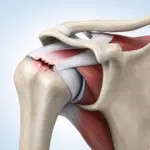
- Rotator cuff tears – damage to the muscles and tendons stabilizing the shoulder
- Frozen shoulder – progressive stiffening and thickening of the joint capsule
- Shoulder impingement – tendons getting pinched during arm movement
- Cartilage damage – wear from repetitive overhead motion or injury
- Previous trauma – old fractures or dislocations that alter joint mechanics
Symptoms That May Indicate You Need Joint Replacement
- Persistent pain that doesn’t improve with rest or medication
- Pain while walking or climbing stairs
- Pain even at rest, without movement
- Night pain that disrupts sleep
- Limited range of motion
- Stiffness that makes daily tasks difficult
- Difficulty climbing stairs or getting up from a chair
- Difficulty lifting the arm above shoulder height
- Overall decline in quality of life and independence
Risk Factors for Joint Damage
- Advancing age
- Being overweight, which adds stress on hip and knee joints
- Previous joint injuries
- Existing arthritis conditions
- Family history of joint disease
- High-impact sports participation
- A sedentary lifestyle that weakens supporting muscles
How an Orthopedic Surgeon Diagnoses Joint Problems
An accurate diagnosis is the foundation of the right treatment plan. Dr. Vijay Kulkarni’s evaluation typically includes:
- Physical examination – assessing range of motion, strength, and pain triggers
- Medical history – understanding symptom duration, past injuries, and lifestyle
- X-rays – to check joint space narrowing and bone-on-bone contact
- MRI scan – for detailed imaging of cartilage, ligaments, and soft tissue
- CT scan – for complex bone structure assessment, when needed
- Blood tests – to rule out inflammatory or autoimmune causes, when required
Non-Surgical Treatment Options
Surgery is never the first step. Most patients benefit from a structured conservative approach before replacement is even considered:
- Lifestyle modifications and activity pacing
- Weight management to reduce joint load
- Physiotherapy to strengthen supporting muscles
- Activity modification to avoid aggravating movements
- Pain medications, under medical supervision
- Joint injections for temporary relief
- PRP (Platelet-Rich Plasma) therapy
- Hyaluronic acid injections for joint lubrication
- Walking aids to reduce hip joint stress
- Shoulder braces and hip supports for stability
When Does Replacement Surgery Become the Best Option?
Conservative treatment can manage symptoms for months or even years — but for some patients, it eventually stops working. Replacement surgery is generally recommended when:
- Arthritis has become severe on imaging
- X-rays show bone-on-bone contact with no cartilage cushioning left
- Pain persists despite consistent physiotherapy, medication, and injections
- Mobility loss significantly limits daily activities
- Quality of life — sleep, independence, and mood — is consistently affected
At this stage, delaying surgery often means living with avoidable pain and, in some cases, allows secondary muscle weakness or joint deformity to worsen.
Types of Joint Replacement Surgery
Hip Replacement Surgery
- Total Hip Replacement – both the ball and socket are replaced with prosthetic components, typically for advanced arthritis
- Partial Hip Replacement – only the femoral head is replaced, often used for certain hip fractures
Shoulder Replacement Surgery
- Total Shoulder Replacement – both the ball and socket are replaced, suited to patients with an intact rotator cuff
- Reverse Shoulder Replacement – the ball-and-socket positions are reversed, ideal for patients with rotator cuff tears combined with arthritis
- Partial Shoulder Replacement – only the humeral head is replaced in select cases
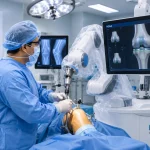
Robotic Joint Replacement
Robotic-assisted joint replacement has become an important advancement in orthopedic care, offering:
- Greater surgical precision
- More accurate implant positioning
- Smaller incisions
- Faster recovery in many cases
- Improved long-term implant function
Dr. Vijay Kulkarni offers robotic knee replacement and applies similar precision-driven techniques across hip and shoulder procedures where appropriate, tailored to each patient’s anatomy.
Recovery Timeline
| Phase | What to Expect |
| Week 1 | Hospital stay, initial pain management, assisted walking or gentle arm movement begins |
| Weeks 2–6 | Physiotherapy intensifies, gradual increase in mobility and strength |
| Months 2–3 | Most patients resume light daily activities and walking without support |
| Long-term (6+ months) | Continued strengthening, return to most normal activities with joint precautions |
Recovery timelines vary based on age, overall health, and the specific procedure performed. Dr. Kulkarni provides a personalized recovery plan for every patient.
Tips to Delay Joint Replacement
If you’re not yet a candidate for surgery, these habits can help protect your joints for longer:
- Maintain a healthy body weight
- Stay active with low-impact exercise like swimming or walking
- Strengthen muscles around the hip and shoulder
- Practice good posture during daily activities
- Avoid repetitive stress on the affected joint
- Seek orthopedic consultation early, rather than waiting for pain to become severe
When Should You Consult an Orthopedic Surgeon?
You should not wait for pain to become unbearable. Consult an orthopedic surgeon if you notice:
- Pain lasting more than a few weeks
- Pain that interrupts sleep
- Reduced ability to walk, climb stairs, or lift your arm
- Swelling or visible joint deformity
- Pain that worsens despite home care
Early evaluation often means more treatment options and a better long-term outcome.
Comparison Tables
Hip Arthritis vs. Shoulder Arthritis
| Aspect | Hip Arthritis | Shoulder Arthritis |
| Common symptom | Groin or thigh pain | Deep joint pain, worse with overhead motion |
| Impact on daily life | Difficulty walking, climbing stairs | Difficulty lifting, reaching overhead |
| Weight-bearing joint | Yes | No |
| Typical progression | Often faster due to weight-bearing stress | Can be slower, but rotator cuff damage speeds it up |
Temporary Joint Pain vs. Joint Replacement Candidate
| Feature | Temporary Joint Pain | Replacement Candidate |
| Duration | Days to a few weeks | Months, often worsening |
| Response to rest | Improves | Little to no improvement |
| Night pain | Rare | Common |
| Imaging findings | Normal or mild changes | Bone-on-bone, severe arthritis |
Non-Surgical Treatment vs. Joint Replacement
| Factor | Non-Surgical Treatment | Joint Replacement |
| Best suited for | Mild to moderate joint damage | Severe, advanced joint damage |
| Pain relief | Temporary | Long-term |
| Recovery time | None to minimal | Weeks to months |
| Mobility restoration | Limited | Significant |
Hip Replacement vs. Shoulder Replacement
| Factor | Hip Replacement | Shoulder Replacement |
| Weight-bearing | Yes | No |
| Common surgery type | Total or partial | Total, reverse, or partial |
| Recovery focus | Walking, standing endurance | Arm mobility, lifting strength |
| Typical candidates | Advanced hip arthritis, fractures | Rotator cuff arthropathy, arthritis |
Traditional vs. Robotic Joint Replacement
| Factor | Traditional Surgery | Robotic Joint Replacement |
| Precision | Surgeon-guided | Computer-assisted precision |
| Incision size | Standard | Often smaller |
| Implant positioning | Manual assessment | Highly accurate, mapped |
| Recovery | Standard timeline | Often faster in suitable candidates |
Frequently Asked Questions
- When should I consider hip replacement surgery? Consider hip replacement when pain persists despite physiotherapy, medication, and injections, especially if X-rays show bone-on-bone arthritis and daily activities like walking or climbing stairs have become difficult.
- How do I know if I need shoulder replacement? If you experience constant shoulder pain, disturbed sleep due to night pain, and significant loss of movement despite conservative treatment, a shoulder replacement evaluation is worth discussing with an orthopedic surgeon.
- Is robotic joint replacement better? Robotic-assisted surgery offers improved precision in implant positioning and can support faster recovery for suitable candidates, but the right approach depends on individual joint anatomy and overall health, best assessed by your surgeon.
- How long does recovery take? Most patients begin walking or moving the joint within days after surgery, with significant functional recovery over 6 to 12 weeks. Full strength and long-term recovery can take several months.
- Can physiotherapy prevent surgery? Physiotherapy can delay or sometimes avoid surgery in early to moderate stages of joint damage by strengthening supporting muscles and improving mobility. In advanced arthritis, it manages symptoms but cannot reverse joint damage.
- Is replacement surgery safe? Joint replacement surgery is a well-established procedure with high success rates. As with any surgery, individual risk depends on overall health, which your orthopedic surgeon will assess during consultation.
- What is the right age for joint replacement? There is no fixed age; the decision depends on the severity of joint damage, pain levels, and impact on daily life rather than age alone. Both younger and older patients may be candidates.
- How do I choose the best orthopedic surgeon? Look for a surgeon with strong experience in joint replacement, access to advanced techniques like robotic surgery, clear communication, and a personalized approach to diagnosis and treatment planning.
Conclusion
Chronic hip or shoulder pain isn’t something you have to accept as part of aging. While many cases respond well to physiotherapy, weight management, and non-surgical care, some reach a point where these measures no longer provide relief. Recognizing the warning signs early — persistent pain, night pain, stiffness, and reduced mobility — allows for timely diagnosis and a wider range of treatment options. If conservative care hasn’t worked for you, consulting an experienced Hip Replacement Surgeon in Vajarahalli can help you understand whether joint replacement is the right next step toward lasting relief and better mobility.
Book Appointment:
Living with hip or shoulder pain that won’t go away? Dr. Vijay Kulkarni provides expert orthopedic evaluation and advanced joint replacement care, including robotic-assisted techniques, for patients across Vajarahalli, JP Nagar, Jayanagar, Banashankari, Bannerghatta Road, and Doddakallasandra. Book a consultation today and take the first step toward a pain-free, active life.