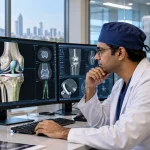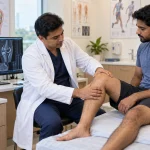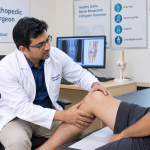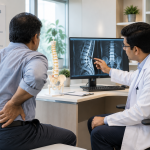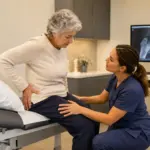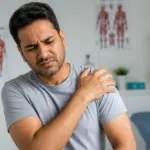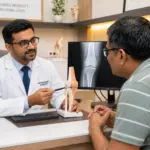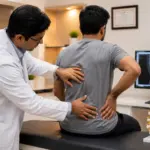
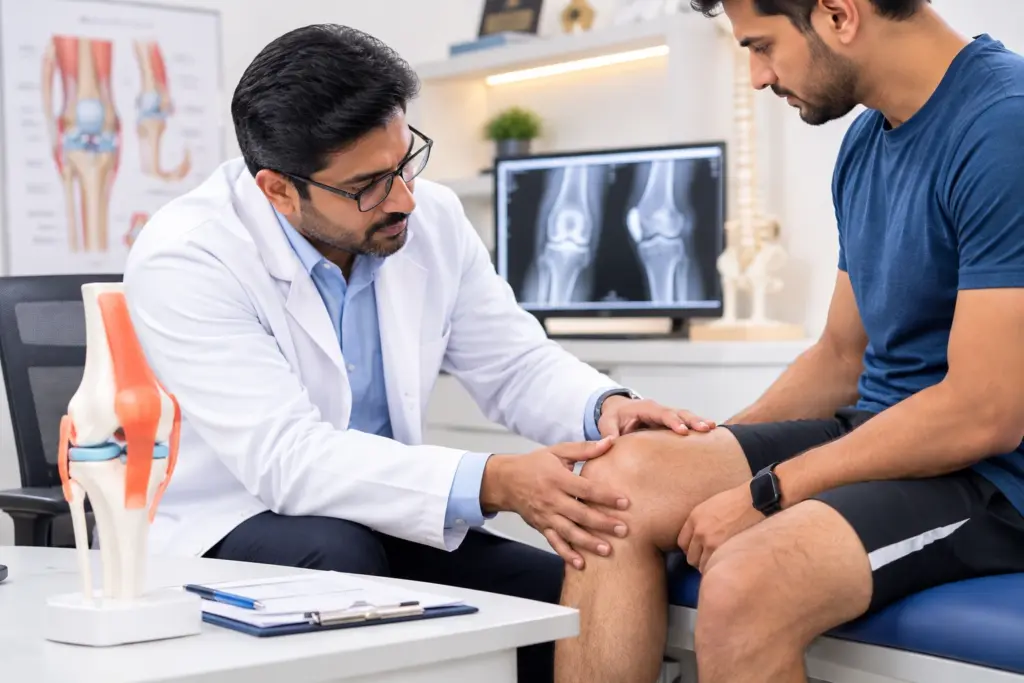
If you’ve sprained the same ankle twice, felt your knee “give way” again, or watched your shoulder pain return just when you thought it had healed, you’re not alone. Recurring injuries are one of the most frustrating experiences for athletes and fitness lovers alike. Effective Sports Injury Prevention isn’t just about resting after an injury — it’s about understanding why the same injury keeps returning and fixing the root cause, not just the symptom. As an orthopedic specialist treating athletes across Bangalore, Dr. Vijay Kulkarni sees this pattern often: an injury heals on the surface, but the underlying weakness, instability, or bad habit that caused it never gets addressed, so it comes back — usually worse than before.
Sports injuries often recur because athletes return to play before tissues fully heal, skip proper rehabilitation, or ignore underlying muscle weakness and poor biomechanics. Sports Injury Prevention requires complete healing, structured strength training, correct technique, and orthopedic follow-up before resuming full activity.
Recurring sports injuries typically result from early return to play, incomplete rehabilitation, muscle weakness, ligament instability, poor warm-up habits, and faulty movement patterns. Common repeat injuries include ACL tears, ankle sprains, rotator cuff issues, and runner’s knee. Sports Injury Prevention involves proper warm-ups, structured strength and flexibility training, sport-specific conditioning, adequate rest, and prompt orthopedic evaluation of pain that doesn’t resolve. Dr. Vijay Kulkarni, an orthopedic surgeon near Konankunte Cross, Bangalore, recommends addressing the root biomechanical cause — not just the symptom — through physiotherapy, imaging-based diagnosis, and, when needed, arthroscopic treatment, to prevent injuries from resurfacing during future training or competition.
What Are Sports Injuries?
Sports injuries are damage to muscles, ligaments, tendons, bones, or joints that occur during physical activity or athletic training. They range from mild sprains to complete ligament tears and fractures. Whether you’re a weekend badminton player in Jayanagar or a competitive footballer near Bannerghatta Road, sports injuries fall into two broad categories: acute injuries (sudden, like a twisted ankle) and overuse injuries (gradual, from repeated stress, like shin splints). Understanding this difference is the first step in genuine Sports Injury Prevention.
Why Sports Injuries Often Recur
An injury rarely returns because of bad luck. It returns because the tissue was never fully rehabilitated, the surrounding muscles remain weak, or the athlete resumed activity before the body was biomechanically ready. Pain may disappear long before healing is complete, which tricks many athletes into thinking they’re “fine.” This gap between feeling better and actually being healed is where most repeat injuries begin.
Common Reasons Injuries Return
- Returning to sports too early — before tissue strength is restored
- Poor rehabilitation — skipping physiotherapy or stopping too soon
- Muscle weakness — especially in stabilizing muscle groups
- Ligament instability — a previously stretched or torn ligament fails to support the joint
- Improper warm-up — cold muscles are more prone to strain
- Poor biomechanics — incorrect running or jumping form places uneven stress on joints
- Incorrect footwear — inadequate support during running or court sports
- Overtraining — insufficient recovery between sessions
- Ignoring pain — playing through discomfort instead of addressing it early
Most Common Recurring Sports Injuries
| Injury Type | Commonly Affected Athletes |
| ACL injuries | Footballers, basketball players, pivoting sports |
| Meniscus injuries | Runners, footballers, cricket fast bowlers |
| Ankle sprains | Badminton, tennis, basketball players |
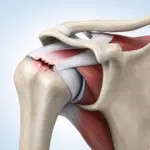
| Rotator cuff injuries | Swimmers, throwers, tennis players |
| Tennis elbow | Tennis, badminton, racquet sports |
| Runner’s knee | Marathon runners, joggers |
| Shin splints | Long-distance runners |
| Hamstring strains | Sprinters, footballers |
| Achilles tendon injuries | Runners, jumping-sport athletes |
ACL injury prevention and managing running injuries are especially important for Bangalore’s growing marathon and fitness community, where training volume often increases faster than the body can adapt.
Risk Factors
Certain factors raise the likelihood of repeat injury: previous injury history, poor flexibility, muscle imbalance, inadequate rest between competitions, growth spurts in young athletes, playing on hard or uneven surfaces, and skipping structured strength training. Parents of young athletes should note that growing bodies are particularly vulnerable to overuse injuries when training loads increase too quickly.
Warning Signs You Should Never Ignore
- Joint swelling that doesn’t settle within a few days
- A feeling of the knee or ankle “giving way”
- Pain that returns every time you resume the same activity
- Clicking, locking, or catching sensations in a joint
- Persistent stiffness after rest
- Weakness in the limb compared to the other side
If any of these sound familiar, it’s time to consult a sports orthopedic surgeon in Konankunte Cross rather than continuing to self-manage the problem.
Diagnosis by an Orthopedic Specialist
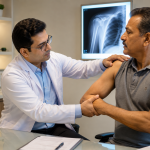
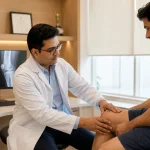
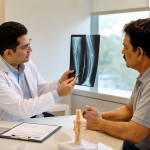
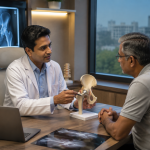
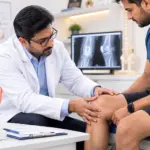
Accurate diagnosis is the foundation of lasting recovery. Dr. Vijay Kulkarni’s evaluation typically includes:
- Medical history — understanding the injury pattern and past treatments
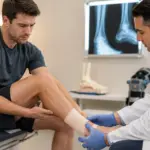
- Physical examination — testing joint stability, strength, and range of motion
- X-rays — to rule out fractures or bone changes
- MRI — to assess ligament, tendon, and cartilage damage in detail
- CT Scan — for complex bone injuries
- Ultrasound (where appropriate) — for soft tissue and tendon assessment
Best Prevention Strategies
Genuine Sports Injury Prevention combines several habits, not a single fix:
- Proper warm-up — 10–15 minutes of dynamic movement before activity
- Cool-down — gradual return to rest after exertion
- Strength training — particularly for stabilizing muscles around joints
- Flexibility exercises — to maintain healthy range of motion
- Cross-training — reducing repetitive strain on the same tissues
- Rest and recovery — allowing at least one full rest day weekly
- Nutrition — supporting tissue repair with adequate protein and micronutrients
- Hydration — maintaining muscle and tendon elasticity
- Injury screening — periodic orthopedic check-ups for competitive athletes
- Sports-specific conditioning — training the exact movement patterns your sport demands
Home Care After Sports Injuries
For minor injuries, initial home care can help: rest the joint, apply ice for 15–20 minutes several times a day, use a compression bandage, and elevate the limb. However, home care is only a first step — it should never replace professional evaluation if pain, swelling, or instability persists beyond a few days.
Physiotherapy
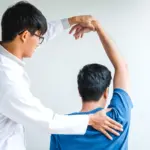
Physiotherapy is central to preventing re-injury. A structured program restores strength, flexibility, and joint control gradually, ensuring the body is genuinely ready for sport — not just pain-free. Skipping this step is one of the leading causes of repeated ligament injury treatment in Konankunte Cross patients require.
Non-Surgical Treatments
Many sports injuries respond well to non-surgical care, including physiotherapy, bracing, activity modification, anti-inflammatory management, and regenerative options like PRP therapy. Non-surgical treatment is usually the first approach unless there is significant structural damage.
PRP Therapy
Platelet-Rich Plasma (PRP) therapy uses a concentration of the patient’s own platelets to accelerate healing in tendons and ligaments. It’s often used for tennis elbow, partial ligament tears, and chronic tendon injuries that haven’t responded to standard treatment.
Arthroscopy
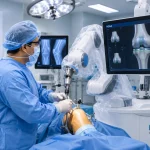
Arthroscopy is a minimally invasive surgical technique using a small camera to diagnose and treat joint problems through tiny incisions. It’s commonly used for meniscus repair, ligament reconstruction, and cartilage treatment, offering faster recovery than open surgery.
ACL Reconstruction
When the ACL is completely torn, especially in athletes who pivot, jump, or change direction frequently, ACL reconstruction using a tendon graft restores joint stability. This is a key part of long-term ACL injury prevention for athletes who want to return safely to competitive sport.
Ligament Repair
Depending on severity, ligament injuries may be treated with bracing and rehabilitation or surgical repair/reconstruction. The right choice depends on the ligament involved, the degree of tearing, and the athlete’s functional demands.
When Surgery Becomes Necessary
Surgery is generally considered when there is a complete ligament tear affecting joint stability, a locked joint from meniscus damage, a fracture involving a joint surface, or when non-surgical treatment has failed to resolve symptoms over several months.
Recovery Timeline
Recovery varies by injury: ankle sprains may heal in 2–6 weeks, meniscus repairs in 2–3 months, and ACL reconstruction typically requires 6–9 months before safe return to competitive sport. Rushing this timeline is one of the most common causes of re-injury.
Prevention Tips from Dr. Vijay Kulkarni
“Most repeat injuries I see aren’t bad luck — they’re a sign the body wasn’t fully ready to return,” notes Dr. Vijay Kulkarni. He advises athletes to complete their full rehabilitation program even after pain resolves, prioritize strength and balance training year-round, and seek an orthopedic evaluation the first time an injury occurs rather than after the third recurrence. This proactive approach is the foundation of effective Sports Injury Prevention for athletes at every level.
When to Consult an Orthopedic Surgeon
Consult an orthopedic surgeon if pain persists beyond a week, swelling recurs with activity, the joint feels unstable, or an old injury flares up again. Early evaluation from a qualified sports orthopedic surgeon in Konankunte Cross can prevent a minor issue from becoming a chronic problem.
Comparison Tables
Acute Injury vs Overuse Injury
| Feature | Acute Injury | Overuse Injury |
| Onset | Sudden | Gradual |
| Cause | Single traumatic event | Repetitive stress |
| Example | Ankle sprain, fracture | Shin splints, tendinitis |
| Typical Treatment | Immediate care, imaging | Activity modification, physiotherapy |
Sprain vs Ligament Tear
| Feature | Sprain | Ligament Tear |
| Severity | Mild stretching of ligament | Partial or complete rupture |
| Symptoms | Swelling, mild pain | Instability, significant swelling |
| Treatment | Rest, ice, bracing | May require surgery/reconstruction |
Home Care vs Professional Treatment
| Feature | Home Care | Professional Treatment |
| Best for | Minor, first-time strains | Persistent or recurring injuries |
| Includes | Rest, ice, compression | Imaging, physiotherapy, procedures |
| Risk if overused | Missed underlying damage | Comprehensive, accurate recovery |
Physiotherapy vs Surgery
| Feature | Physiotherapy | Surgery |
| Invasiveness | Non-invasive | Invasive |
| Best for | Mild-moderate injuries | Complete tears, structural damage |
| Recovery time | Shorter | Longer, structured rehab needed |
Arthroscopy vs Open Surgery
| Feature | Arthroscopy | Open Surgery |
| Incision size | Small (keyhole) | Larger |
| Recovery | Faster | Slower |
| Use case | Most ligament/cartilage repairs | Complex reconstructions |
FAQs
- Why do sports injuries keep coming back even after treatment?
Injuries often recur because the underlying weakness, instability, or biomechanical issue that caused them was never fully corrected. Returning to sport before completing rehabilitation is the most common reason for repeated injuries in athletes of all levels. - How can I prevent ACL injuries while playing sports?
Effective ACL injury prevention includes strengthening the hamstrings and glutes, practicing proper landing and pivoting technique, and using neuromuscular training programs. Athletes with a prior ACL injury should also complete full rehabilitation before returning to pivoting sports. - How do I prevent running injuries as a marathon runner?
Preventing running injuries involves gradually increasing mileage, wearing proper running shoes, incorporating strength training, and allowing adequate rest days. Sudden spikes in training volume are a leading cause of overuse injuries in runners. - When should I see an orthopedic surgeon for a sports injury?
See a specialist if pain lasts more than a week, if the joint feels unstable or swollen, or if an old injury has flared up again. Early diagnosis prevents a treatable injury from becoming a chronic, recurring problem. - Is surgery always required for ligament injuries?
No. Many ligament injuries heal well with physiotherapy and bracing. Surgery is typically reserved for complete tears or cases where the joint remains unstable despite non-surgical treatment. - What is the recovery time after ACL reconstruction?
Most athletes need 6–9 months of structured rehabilitation before safely returning to competitive sport after ACL reconstruction. Following the full recovery timeline significantly reduces the risk of re-injury. - Can physiotherapy alone prevent recurring sports injuries?
Physiotherapy plays a major role in prevention by restoring strength, balance, and flexibility. Combined with proper warm-ups and gradual return to activity, it significantly lowers the risk of an injury returning. - Where can I find a sports orthopedic surgeon near Konankunte Cross?
Dr. Vijay Kulkarni, a sports orthopedic surgeon in Konankunte Cross, provides diagnosis and treatment for athletes from JP Nagar, Jayanagar, Banashankari, and Bannerghatta Road for both acute and recurring sports injuries.
Conclusion
Recurring sports injuries are frustrating, but they are rarely random — they’re usually a sign that healing was incomplete or the root cause was never addressed. True Sports Injury Prevention means going beyond rest and ice: it requires proper diagnosis, complete rehabilitation, structured strength training, and, when needed, timely medical intervention. Whether you’re dealing with running injuries, an unstable knee, or a shoulder that just won’t fully heal, addressing the underlying cause today can save you months of setbacks tomorrow.
Call to Action
If you’re experiencing repeated sports injuries near Konankunte Cross, JP Nagar, Banashankari, Jayanagar, Bannerghatta Road, Doddakallasandra, Vajrahalli, or Kumaraswamy Layout, don’t wait for the next flare-up. Book a consultation with Dr. Vijay Kulkarni for expert diagnosis, personalized rehabilitation, and long-term Sports Injury Prevention care designed to keep you in the game.