
Knee Replacement Surgery Cost in Bangalore: 2026 Price Guide
If you or a family member are researching knee replacement surgery in RR Nagar or elsewhere in Bangalore, you’ve likely noticed that prices quoted online vary a great deal. That’s because knee replacement is not a one-size-fits-all procedure — the final cost depends on your specific medical condition, the hospital you choose, the surgeon’s experience, the type of implant used, and several other factors.
This guide is designed to help patients and families in Bangalore, including those searching for a knee replacement surgeon in RR Nagar, understand what actually drives the cost of surgery. Rather than offering a single number that may not apply to your case, this article breaks down each component of the expense so you can ask informed questions during your consultation. For an accurate, personalized estimate, a detailed evaluation with an orthopedic surgeon is always necessary.
What Is Knee Replacement Surgery?
Knee replacement surgery is an orthopedic procedure in which damaged or worn-out surfaces of the knee joint are replaced with artificial components, often made of metal and medical-grade plastic. Over time, conditions like osteoarthritis can wear away the smooth cartilage that allows the knee to move without pain. When this cartilage is significantly damaged, bones may rub against each other, causing pain, stiffness, and reduced mobility.
The goal of knee replacement is to recreate a smoother joint surface so the knee can move with less pain than before. It is generally considered when conservative treatments — such as medication, physiotherapy, and lifestyle changes — no longer provide adequate relief for a patient’s daily activities.
When Is Knee Replacement Recommended?
Knee replacement is not automatically recommended just because someone experiences knee pain. Orthopedic surgeons typically consider surgery only after evaluating the severity of joint damage and the impact on a patient’s quality of life. Common indications include:
- Advanced knee osteoarthritis confirmed on imaging
- Significant cartilage or joint surface damage
- Persistent knee pain that limits daily function
- Difficulty walking or standing for extended periods
- Difficulty climbing or descending stairs
- Reduced mobility affecting independence
- Pain that disturbs sleep or rest
- Limited improvement despite appropriate non-surgical treatment
Every case is different, and a surgeon will assess your specific symptoms, X-rays, and overall health before recommending a treatment path.
Knee Replacement Surgery Cost in Bangalore: What Determines the Price?
Patients often ask about knee treatment in Bangalore costs expecting a fixed number, but knee replacement pricing is influenced by multiple independent factors. Here’s a breakdown of what typically contributes to the overall cost.
Surgeon Fees
Professional fees can vary depending on the surgeon’s experience, the complexity of the case, and the specific technique used (conventional or robotic-assisted). A total knee replacement surgeon in RR Nagar with extensive experience may structure fees differently than a general orthopedic practice.
Hospital Charges
These typically include operation theatre usage, nursing care, length of hospital stay, use of specialized medical equipment, and general hospital services. Hospital charges can differ significantly between institutions based on infrastructure and accreditation.
Implant Cost
The knee implant itself is a major cost component. Implant pricing depends on the design, material, manufacturer, and whether it is a standard or specialized implant suited to the patient’s anatomy.
Type of Knee Replacement
Whether a patient undergoes total knee replacement, partial knee replacement, or robotic-assisted surgery affects both the procedure’s complexity and its cost.
Diagnostic Tests
Pre-operative assessments such as X-rays, blood tests, ECG, and other evaluations are typically required to confirm a patient is medically fit for surgery. These add to the overall expense.
Room Category
Hospital room selection — from shared wards to private rooms — directly affects hospitalization charges, sometimes substantially.
Medicines and Consumables
Surgical consumables, medications, dressings, and other hospital supplies used during and after surgery contribute to the final bill.
Physiotherapy and Rehabilitation
Recovery often involves structured physiotherapy, which may be provided during the hospital stay and continued afterward, adding to overall treatment costs.
Follow-Up Visits
Post-operative monitoring through follow-up consultations is an important part of recovery and should be factored into overall planning.
What Should a Knee Replacement Cost Estimate Include?
When requesting a cost estimate from a hospital, ask that it clearly itemizes each component so there are no surprises later.
| Cost Component | What It May Include |
| Surgeon fee | Professional surgical charges |
| Hospital charges | OT, nursing and hospital services |
| Implant | Knee implant and related components |
| Anesthesia | Anesthesia-related professional charges |
| Diagnostics | Pre-operative investigations |
| Medicines | Required medications and consumables |
| Room | Hospital accommodation |
| Physiotherapy | Rehabilitation and recovery support |
| Follow-up | Post-operative consultations |
Any figures you see online, including in this article, should be treated as general guidance only. Actual costs must be confirmed directly with the hospital and surgical team after a proper evaluation.
Types of Knee Replacement Surgery
Total Knee Replacement
Total knee replacement involves resurfacing the entire knee joint and is generally considered for patients with widespread joint damage affecting multiple compartments of the knee.
Partial Knee Replacement
Partial knee replacement addresses damage limited to one part of the knee joint, leaving healthy areas untouched. It is only suitable for carefully selected patients whose damage pattern fits this approach, as determined by clinical and imaging assessment.
Robotic-Assisted Knee Replacement
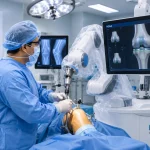
Robotic-assisted knee replacement uses technology to support surgical planning and execution, potentially helping with precision during implant positioning. This does not mean it is automatically the better choice for every patient. Suitability depends on individual anatomy, the extent of joint damage, and the surgeon’s clinical assessment. Patient selection remains an important part of deciding whether this approach is appropriate.
Knee Replacement Cost: Traditional vs Robotic Surgery
| Factor | Conventional Knee Replacement | Robotic-Assisted Knee Replacement |
| Surgical planning | Standard imaging and planning | Technology-assisted planning |
| Technology | Conventional surgical tools | Robotic-assisted system |
| Suitability | Depends on patient condition | Depends on anatomy and surgeon assessment |
| Cost | May vary | May be higher depending on technology and hospital |
| Recovery | Individualized | Individualized |
| Decision | Based on clinical assessment | Based on clinical assessment |
The right technology for your surgery should be selected based on your individual medical needs and your surgeon’s recommendation — not on cost alone or marketing claims.
Does Health Insurance Cover Knee Replacement?
Knee replacement surgery may be covered by many health insurance policies, but coverage details differ from policy to policy. Points to verify with your insurer include:
- Whether a waiting period applies for joint replacement procedures
- Whether pre-existing disease clauses affect your claim
- What the overall coverage limit is for your policy
- Whether room-rent limits could affect your final payable amount
- Whether implant costs are covered separately or as part of the package
- Whether the hospital is part of your insurer’s cashless network
Because insurance terms vary widely, it’s important to confirm your specific coverage directly with your insurance provider and the hospital’s insurance desk before scheduling surgery.
How to Reduce Unexpected Knee Replacement Expenses
- Ask the hospital for a written, itemized cost estimate.
- Confirm exactly what the surgical package includes.
- Ask whether implant charges are included or billed separately.
- Check room category charges before selecting accommodation.
- Confirm your insurance coverage in advance with your insurer.
- Ask about physiotherapy costs during and after hospitalization.
- Understand expected follow-up visit expenses.
- Ask whether additional tests might be required based on your health condition.
- Discuss potential complications and related costs openly with your treating team.
Diagnosis Before Knee Replacement
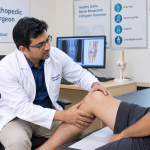
Before recommending knee replacement, an orthopedic surgeon typically conducts a thorough evaluation, which may include:
Medical History — Understanding your symptoms, past treatments, and overall health.
Physical Examination — Assessing joint movement, alignment, stability, and pain patterns.
X-Ray — Standard imaging to evaluate the extent of joint damage.
MRI When Required — Used in select cases for more detailed soft-tissue assessment.
Blood Tests and Pre-Operative Evaluation — Confirming that a patient is medically fit for surgery.
The exact combination of tests depends on each patient’s individual case and health background.
Alternatives Before Knee Replacement
Knee replacement is not the first treatment option for every patient. Depending on the severity of the condition, a surgeon may first recommend:
- Activity modification
- Weight management
- Physiotherapy and strengthening exercises
- Pain management strategies
- Bracing, where appropriate
- Injections, where clinically appropriate
- Other non-surgical treatment approaches
Treatment should always be personalized based on your specific diagnosis, symptom severity, and response to prior care.
Recovery After Knee Replacement
First Few Days Recovery typically begins with hospital monitoring, pain management, and early movement encouraged under medical supervision, often supported by physiotherapy.
First Few Weeks Walking generally improves gradually with continued exercises and scheduled follow-up appointments to monitor healing.
Following Months Strength and mobility often continue to improve over time, with ongoing rehabilitation playing an important role in the overall outcome.
Recovery timelines vary between patients, and no specific duration can be guaranteed.
Factors That Can Affect Recovery
- Age
- Overall health
- Muscle strength before surgery
- Body weight
- Diabetes and other underlying medical conditions
- Pre-operative mobility levels
- Participation in physiotherapy
- Type of surgery performed
- Individual healing response
Risks and Possible Complications
As with any surgical procedure, knee replacement carries potential risks, which may include:
- Infection
- Blood clots
- Bleeding
- Joint stiffness
- Persistent pain
- Implant-related problems
- Nerve or blood vessel injury
- Need for additional treatment
These risks vary from patient to patient. It’s important to discuss your individual risk factors in detail with your orthopedic surgeon before proceeding with surgery.
When Should You Consult an Orthopedic Surgeon?
You may want to consult a specialist for knee replacement surgery in RR Nagar if:
- Knee pain persists despite conservative treatment
- Pain interferes with walking or standing
- Daily activities have become difficult to manage
- Sleep is disrupted by knee pain
- Knee stiffness is progressively worsening
- There is visible deformity in the knee
- X-rays show advanced arthritis
- Non-surgical treatments are no longer providing sufficient relief
An early consultation allows your surgeon to evaluate your condition, discuss available options, and determine whether surgery — or another form of treatment — is appropriate for you.
Total Knee Replacement vs Partial Knee Replacement
| Feature | Total Knee Replacement | Partial Knee Replacement |
| Area treated | More of the knee joint | Affected compartment |
| Suitability | More extensive joint damage | Selected patients |
| Assessment | Comprehensive evaluation | Requires specific disease pattern |
| Recovery | Individualized | Individualized |
| Decision | Surgeon assessment | Surgeon assessment |
Knee Pain Treatment vs Knee Replacement
| Aspect | Non-Surgical Treatment | Knee Replacement |
| Purpose | Manage symptoms and function | Replace damaged joint surfaces |
| Examples | Physiotherapy, medicines, lifestyle changes | Partial or total replacement |
| Suitable for | Many early/moderate cases | Selected advanced cases |
| Surgery | No | Yes |
| Recovery | Usually gradual | Requires rehabilitation |
Frequently Asked Questions
- How much does knee replacement surgery cost in Bangalore?
The cost depends on the hospital, surgeon’s fee, implant type, room category, diagnostic needs, and whether the surgery is conventional or robotic-assisted. There is no single fixed price, and patients should request a personalized written estimate from the hospital after evaluation. - What factors affect knee replacement surgery cost?
Costs are influenced by surgeon fees, hospital charges, implant type, anesthesia, pre-operative diagnostics, room category, medicines, physiotherapy, and follow-up care. Each patient’s requirements differ based on their medical condition, which affects the overall expense. - Is knee replacement covered by health insurance?
Many health insurance policies cover knee replacement, but coverage depends on your specific policy terms, waiting periods, room-rent limits, and network hospital arrangements. It’s important to confirm details directly with your insurer before surgery. - How long does knee replacement surgery take?
Surgical duration varies depending on the type of procedure, complexity of the case, and surgical technique used. Your surgeon can provide a more specific estimate based on your individual condition during consultation. - How long does it take to recover from knee replacement?
Recovery timelines vary widely between patients based on age, overall health, and adherence to physiotherapy. Many patients see gradual improvement over weeks to months, but no specific recovery period can be guaranteed for any individual. - Is robotic knee replacement more expensive?
Robotic-assisted knee replacement may involve additional technology-related costs compared to conventional surgery, but pricing varies by hospital. Suitability for robotic assistance depends on individual anatomy and clinical assessment, not cost alone. - How do I know if I need total knee replacement?
This determination requires a clinical evaluation, including medical history, physical examination, and imaging such as X-rays. An orthopedic surgeon can assess the extent of joint damage and discuss whether total, partial, or non-surgical treatment is appropriate. - How can I find a knee replacement surgeon in RR Nagar?
Look for an orthopedic surgeon with relevant experience in joint replacement procedures, and consider scheduling a consultation to discuss your symptoms, imaging results, and treatment options before making a decision.
Conclusion
The cost of knee replacement surgery in RR Nagar and across Bangalore depends on a combination of factors — surgeon fees, hospital charges, implant selection, diagnostic requirements, room category, and rehabilitation needs. Because every patient’s medical situation is different, online cost estimates should never replace a proper consultation with an orthopedic surgeon. Whether or not surgery is recommended depends on clinical evaluation of your specific condition, not on cost considerations alone. If knee pain is affecting your daily life, a timely orthopedic assessment can help you understand your options, whether that involves continued non-surgical management or discussing knee replacement in more detail.
Call to Action
If you’re experiencing persistent knee pain and are exploring knee replacement surgery in RR Nagar, Dr. Vijay Kulkarni offers orthopedic consultations to evaluate knee pain, arthritis, and treatment options, including knee replacement where clinically appropriate. Patients from RR Nagar, JP Nagar, Jayanagar, Banashankari, Bannerghatta Road, Doddakallasandra, and Vajrahalli are welcome to schedule a consultation to discuss their symptoms, review diagnostic findings, and receive a personalized treatment plan and cost estimate.