Waking up with a sore back after a long day is common. But when the ache lingers for weeks, keeps coming back, or starts affecting how you sit, walk, or sleep, it’s natural to wonder if something more is going on. Many people search for an orthopedic doctor in Electronic City at exactly this point — not because every backache is serious, but because ongoing pain deserves a proper look.
Chronic lower back pain doesn’t have one single cause. It can come from muscle or ligament strain, a spinal disc problem, age-related wear and tear, nerve irritation, poor posture, an old injury, or, less often, another underlying medical condition. Persistent pain should not automatically be assumed to be a serious spinal disease — but certain symptoms do call for timely medical evaluation, and this guide explains what those are.
When should I see an orthopedic doctor for lower back pain?
See an orthopedic doctor if lower back pain lasts more than a few weeks, keeps returning, follows an injury, radiates into the leg, or comes with numbness, tingling, or weakness. Pain that limits daily activities or doesn’t improve with rest and self-care also warrants professional evaluation.
What Is Chronic Lower Back Pain?
Lower back pain is generally grouped by how long it lasts:
- Acute lower back pain — lasts up to about 6 weeks, often from a strain or minor injury.
- Subacute lower back pain — lasts between 6 and 12 weeks.
- Chronic lower back pain — persists for 12 weeks or longer, or keeps recurring over time.
Even before the 12-week mark, patients may choose to seek medical assessment sooner if pain is severe, keeps coming back, is getting worse, or interferes with normal activities.
Common Causes of Persistent Lower Back Pain
Persistent lower back pain doesn’t have a single cause — it can stem from several different sources, including:
- Muscle or ligament strain
- Poor posture and prolonged sitting
- Disc degeneration
- Herniated or slipped disc
- Nerve irritation and sciatica
- Spinal stenosis
- Facet joint problems
- Spondylosis (age-related spinal wear)
- Sports or lifting injuries
- Previous spinal injuries
- Osteoporosis-related fractures
- Other, less common medical causes
Not every case of chronic lower back pain shares the same cause, which is why an individual assessment matters more than guessing based on symptoms alone.
Why Won’t My Lower Back Pain Go Away?
There are several reasons pain may linger instead of resolving on its own:
- Repeated physical strain on the same muscles or joints
- Inadequate rest or recovery time
- Poor posture during work or daily tasks
- Weak core or supporting back muscles
- An underlying disc or joint problem
- Ongoing nerve irritation
- Degenerative changes in the spine
- Returning to strenuous activity too soon
- An underlying condition that hasn’t yet been evaluated
The exact reason persistent pain continues cannot be confirmed from symptoms alone — this is why a clinical examination, and sometimes imaging, helps identify the actual cause.
Symptoms That May Occur With Lower Back Pain
Symptoms vary depending on the underlying cause, and may include:
- Persistent dull aching
- Sharp or shooting pain
- Pain that worsens after long periods of sitting
- Pain while bending or lifting
- Morning stiffness
- Pain radiating into the buttocks or legs
- Tingling or numbness
- Muscle weakness
- Difficulty standing or walking
- Reduced range of spinal movement
When Should You See an Orthopedic Doctor?
Consider consulting an orthopedic doctor in Electronic City or an orthopedic surgeon in Electronic City if:
- Lower back pain persists or repeatedly returns
- Pain interferes with work or daily activities
- Pain is getting worse over time
- Pain started after an injury or fall
- Pain radiates down into the leg
- There is numbness or tingling
- There is noticeable leg weakness
- Movement is becoming more difficult
- Rest, stretching, or self-care haven’t helped
- Pain is disturbing sleep or mobility
An orthopedic evaluation can help identify the cause early, rather than letting the pain become a long-term issue.
When Is Lower Back Pain an Emergency?
Most chronic lower back pain is not an emergency, but certain symptoms need urgent medical attention:
- New loss of bladder or bowel control
- Numbness around the groin or inner thighs (saddle area)
- Severe or progressively worsening leg weakness
- Significant back pain following major trauma (a fall, accident)
- Fever accompanying severe back pain
- Unexplained weight loss along with persistent back pain
- A history of cancer with new, persistent back pain
- Severe pain accompanied by other concerning symptoms
These symptoms don’t automatically point to one specific diagnosis, but they should never be ignored — prompt assessment is important.
How Is Chronic Lower Back Pain Diagnosed?
Medical History
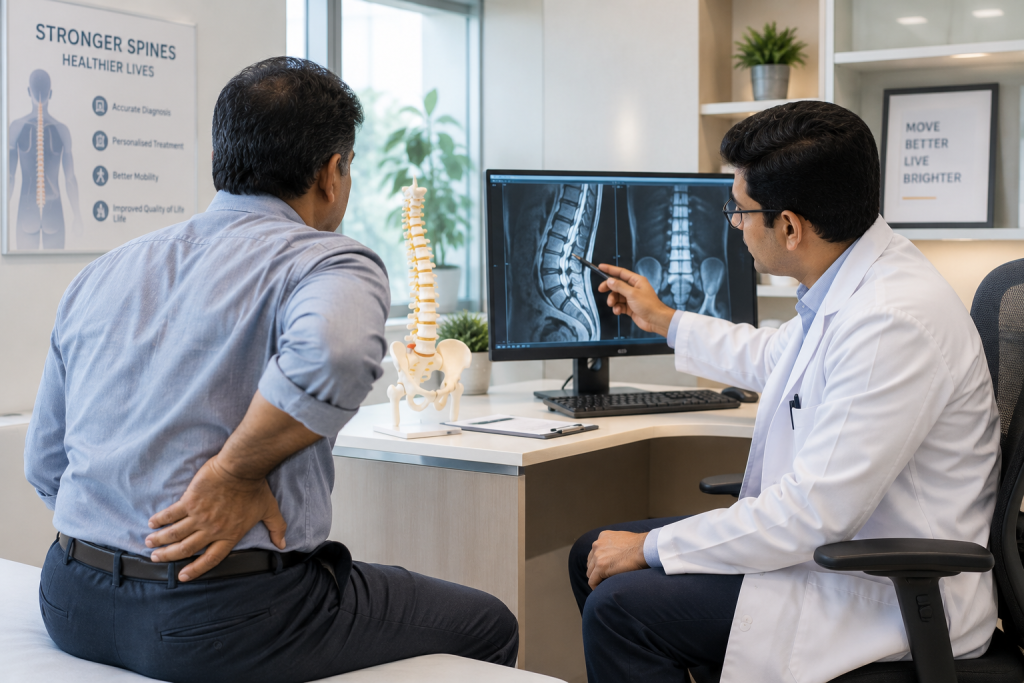
An orthopedic doctor typically asks about the duration, location, and severity of pain, what makes it better or worse, past injuries or treatments, any leg symptoms, numbness or weakness, and relevant medical history.
Physical Examination
This usually includes checking spinal movement, posture, muscle strength, reflexes, sensation, walking pattern, leg movement, and signs of nerve involvement.
Imaging and Other Tests
Imaging is not automatically required for every patient. Depending on findings from the history and exam, a doctor may recommend:
- X-ray
- MRI
- CT scan
- Other tests based on the specific symptoms
Most patients with straightforward mechanical back pain do not need an MRI right away; imaging is used selectively when clinical findings suggest it’s needed.
Treatment Options for Chronic Lower Back Pain
Treatment depends on the underlying cause, severity, how long symptoms have lasted, examination findings, and the patient’s overall health. Options a doctor may consider include:
- Activity modification
- Physiotherapy and exercise-based rehabilitation
- Posture correction
- Core strengthening
- Pain management as advised by a healthcare professional
- Treatment directed at an underlying spinal condition
- Injections in selected cases
- Surgery in selected patients
No single treatment is right for everyone — the approach is tailored to the individual.
Can Lower Back Pain Improve Without Surgery?
Yes — many people with chronic lower back pain improve with conservative, non-surgical care, such as:
- Physical therapy
- Targeted exercise
- Activity modification
- Ergonomic improvements at home or work
- Appropriate medical management
- Regular follow-up to track progress
Surgery is generally considered only in select cases — where there’s an identifiable structural problem, significant nerve involvement, or persistent symptoms despite adequate non-surgical treatment.
When Might Back Surgery Be Considered?
Surgery may be an option in specific situations, such as:
- Significant nerve compression
- Progressive neurological weakness
- Certain structural spinal conditions
- Severe, persistent symptoms tied to a confirmed structural cause
- Failure of appropriate conservative treatment in select patients
- Certain spinal emergencies
Surgery is not always the “better” or “necessary” choice — it depends entirely on individual findings.
Orthopedic Doctor vs Orthopedic Surgeon
Patients often wonder about the difference between these two terms.
| Orthopedic Doctor | Orthopedic Surgeon |
| Evaluates musculoskeletal problems | Evaluates musculoskeletal problems and performs orthopedic surgery |
| May diagnose and manage back pain | May manage back pain and assess whether surgery is appropriate |
| Can recommend conservative treatment | Can recommend conservative or surgical treatment |
| May refer patients for specialist procedures | Performs appropriate surgical procedures when indicated |
In practice, these terms often overlap, since orthopedic surgeons are medical doctors who specialize in the musculoskeletal system, including both non-surgical and surgical care. If you’re searching for an orthopedic surgeon near me Electronic City, you’re typically looking for a specialist who can offer both types of care under one roof.
Chronic Lower Back Pain and Daily Activities
Everyday habits can influence how lower back pain behaves:
- Prolonged sitting, especially with poor posture
- A poorly set-up desk or workstation
- Heavy or repeated lifting
- Frequent bending
- Low overall physical activity
- Sudden jumps in exercise intensity
- Poor sleep posture or an unsupportive mattress
Small, general adjustments — like taking movement breaks, improving desk ergonomics, and building activity gradually — can support back health, though individualized advice should come from your treating doctor.
Lower Back Pain Treatment in Electronic City
Electronic City and its surrounding neighborhoods — including Electronic City Phase 1, Electronic City Phase 2, Neeladri Road, Bommasandra, Hosa Road, Singasandra, Begur, Hulimavu, and Bannerghatta Road — are home to a large working population that spends long hours at desks, which can contribute to posture-related back strain. For residents in and around this part of Bengaluru, a nearby orthopedic doctor in Bangalore can offer timely evaluation rather than letting persistent discomfort go unchecked. Those searching for an orthopedic surgeon in Electronic City or an orthopedic surgeon near me Electronic City can seek a clinical assessment to understand what’s driving their symptoms.
Why Choose an Orthopedic Specialist for Persistent Back Pain?
A detailed orthopedic evaluation typically involves:
- A thorough clinical history and examination
- Identifying possible contributing causes
- A neurological assessment when relevant
- Reviewing any previous imaging
- Deciding whether new imaging is actually needed
- Selecting an appropriate conservative treatment plan
- Identifying patients who may need specialist or surgical input
- Planning follow-up and rehabilitation
Dr. Vijay Kulkarni is an orthopedic surgeon with experience across knee pain, robotic knee replacement, hip replacement, sports injuries, shoulder surgery, arthroscopy, and trauma and fracture care, in addition to general orthopedic evaluation for back-related concerns.
When Should You See an Orthopedic Surgeon?
Orthopedic assessment is reasonable when:
- Back pain persists or repeatedly returns
- Pain follows an injury
- Pain radiates into the leg
- There’s numbness, tingling, or weakness
- Pain affects walking or daily activities
- Symptoms are worsening
- Initial conservative measures haven’t helped
- There are concerning neurological symptoms
If these apply to you, it may be time to consult an orthopedic surgeon in Electronic City for a proper assessment.
Prevention and Back Health Tips
- Stay regularly physically active
- Strengthen core and supporting back muscles appropriately
- Avoid long periods of static sitting
- Maintain good workstation ergonomics
- Use proper lifting techniques
- Increase exercise intensity gradually
- Maintain a healthy body weight
- Avoid smoking
- Follow professional rehabilitation guidance after any injury
Comparison Tables
Acute vs Chronic Lower Back Pain
| Feature | Acute Back Pain | Chronic Lower Back Pain |
| Duration | Usually short-term | Persists or recurs over a longer period |
| Common causes | Strain, injury, sudden movement | Multiple possible causes |
| Evaluation | Depends on symptoms | May require detailed assessment |
| Treatment | Often conservative | Depends on underlying cause |
When to Monitor vs When to Seek Medical Assessment
| Situation | Suggested Action |
| Mild pain after unusual activity | Monitor and use appropriate self-care |
| Persistent or recurring pain | Consider professional evaluation |
| Pain affecting daily activities | Seek medical assessment |
| Leg numbness or weakness | Prompt medical evaluation |
| Loss of bladder/bowel control | Urgent medical attention |
| Severe pain after major trauma | Urgent medical assessment |
FAQs
- When should I see an orthopedic doctor for lower back pain?
Consider a consultation if pain lasts more than a few weeks, keeps returning, follows an injury, or comes with leg symptoms like numbness or weakness. Pain that disrupts sleep, work, or daily movement is also a good reason to get evaluated rather than waiting it out on your own.
- What causes chronic lower back pain?
Chronic lower back pain can result from muscle or ligament strain, disc degeneration, a herniated disc, nerve irritation, spinal stenosis, facet joint issues, or previous injuries. Because there are many possible causes, a clinical evaluation is usually needed to identify what’s actually responsible for your specific symptoms.
- Can chronic lower back pain be treated without surgery?
Yes, many patients improve with non-surgical approaches such as physiotherapy, targeted exercise, activity modification, posture correction, and appropriate pain management. Surgery is typically reserved for select cases involving significant nerve compression or structural problems that haven’t responded to conservative treatment.
- When does lower back pain require an MRI?
Not every case of back pain needs an MRI. It’s usually considered when there are signs of nerve involvement, red-flag symptoms, or when pain hasn’t improved with initial conservative treatment. Your doctor decides based on your history and physical examination findings.
- Can a slipped disc cause persistent lower back pain?
Yes, a herniated or slipped disc can press on nearby nerves and cause ongoing back pain, sometimes radiating into the leg along with numbness or tingling. Not everyone with a slipped disc has severe symptoms, so a clinical exam helps confirm whether this is contributing to your pain.
- When should lower back pain be considered an emergency?
Seek urgent care if you experience loss of bladder or bowel control, numbness in the groin or inner thighs, rapidly worsening leg weakness, or severe pain after major trauma. Fever with severe back pain or unexplained weight loss alongside persistent pain also warrant prompt evaluation.
- Should I see an orthopedic surgeon for persistent back pain?
An orthopedic surgeon can evaluate persistent back pain, order appropriate tests, and recommend either conservative or surgical treatment based on findings. Many patients are managed without surgery, but a surgeon’s assessment helps determine which approach fits your situation.
- Where can I consult an orthopedic doctor in Electronic City?
Residents of Electronic City and nearby areas such as Bommasandra, Hosa Road, and Neeladri Road can consult Dr. Vijay Kulkarni, an orthopedic surgeon, for evaluation of persistent lower back pain and related musculoskeletal concerns.
Conclusion
Persistent lower back pain can come from many different sources, ranging from simple muscle strain to disc-related or nerve-related issues. Not every case requires surgery, and not every case requires an MRI — a proper clinical evaluation helps determine what’s actually needed. Physiotherapy and conservative treatment help a large number of patients, while select cases with neurological involvement or emergency symptoms need prompt medical assessment. If your back pain isn’t improving, an orthopedic doctor in Electronic City can help identify the cause and guide the right next steps for your recovery.
Call To Action
If you live in Electronic City, Electronic City Phase 1, Electronic City Phase 2, Hosa Road, Bommasandra, Singasandra, Begur, Bannerghatta Road, or nearby parts of Bengaluru and have lower back pain that isn’t going away, a timely orthopedic evaluation can help clarify what’s causing it. Dr. Vijay Kulkarni offers consultations for persistent back pain, sports injuries, and a range of musculoskeletal concerns. Book an orthopedic consultation to get a clear picture of your condition and a suitable treatment plan.