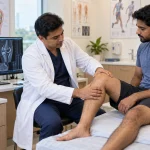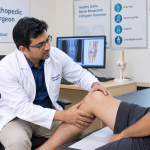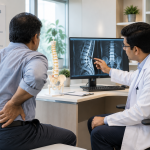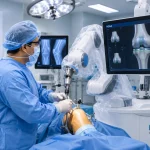
If your knees hurt every time you climb stairs, get up from a chair, or walk to the market, you may already be searching for answers about knee replacement surgery in Subramanyapura. It’s a common concern, especially among older adults and people living with long-standing knee arthritis. But here’s something important to understand first: not everyone with knee pain or arthritis needs surgery.
Knee replacement is generally considered only when severe joint damage causes persistent pain and functional limitation, and when suitable non-surgical treatments haven’t provided enough relief. For many patients, physiotherapy, lifestyle changes, and medical management can help manage symptoms for months or even years before surgery becomes a consideration. This article explains, in plain language, how that decision is actually made.
Knee replacement surgery involves removing severely damaged joint surfaces and replacing them with artificial components to relieve pain and restore function. It’s typically recommended for advanced knee arthritis, not mild or early-stage cases. Common indicators include persistent pain, stiffness, reduced range of motion, and difficulty performing daily tasks despite conservative treatments like physiotherapy, weight management, and medication. Robotic knee replacement uses computer-assisted technology to help plan and guide certain surgical steps, with the surgeon remaining fully responsible for the procedure. Because symptoms alone don’t confirm arthritis severity, clinical examination combined with X-rays or other imaging is essential before deciding whether surgery is the right path.
What Is Knee Replacement Surgery?
Knee replacement surgery is a procedure where severely damaged cartilage and bone in the knee joint are removed and replaced with artificial components made of metal and plastic. It’s designed to reduce pain and improve movement in knees affected by advanced arthritis or injury.
There are two main types:
- Partial knee replacement — only one damaged compartment of the knee is replaced
- Total knee replacement — the entire joint surface is resurfaced
Knee replacement is not usually the first treatment offered for mild knee pain. It’s generally reserved for cases where the joint damage is advanced enough that conservative measures are no longer effective.
What Causes Knee Pain and Knee Joint Damage?
Knee pain can stem from several conditions, including:
- Osteoarthritis (the most common cause in older adults)
- Rheumatoid arthritis
- Previous knee injuries
- Fractures involving the knee joint
- Meniscus or ligament-related problems
- Joint deformity
- Age-related cartilage degeneration
Every patient’s knee condition is different, which is why the cause and severity need individual assessment rather than assumptions based on age or general symptoms.
What Are the Signs That Knee Arthritis May Be Severe?
Some symptoms that may point toward more advanced knee arthritis include:
- Persistent knee pain, even at rest
- Pain while walking or standing for long periods
- Pain while climbing or descending stairs
- Ongoing knee stiffness
- Swelling around the joint
- Reduced range of motion
- Difficulty getting up from a chair
- Trouble with daily activities like bathing or dressing
- Visible knee deformity or bowing
- Pain that disturbs sleep
It’s worth repeating: symptoms alone don’t confirm how severe your arthritis is. A clinical examination and imaging are needed to understand what’s actually happening inside the joint.
Can Knee Arthritis Be Treated Without Surgery?
Yes — many patients with knee arthritis are managed successfully without surgery, at least initially. Common non-surgical approaches include:
- Weight management, where appropriate
- Activity and lifestyle modification
- Physiotherapy and structured exercise
- Muscle-strengthening programs
- Walking aids, when recommended
- Pain management strategies
- Injections in selected patients
- Treating any underlying contributing conditions
The right combination depends on your symptoms, examination findings, imaging results, medical history, and personal goals. There’s no one-size-fits-all approach.
When Is Knee Replacement Surgery Really Needed?
Knee replacement is typically considered when several factors line up together — not based on any single symptom.
- Persistent Knee Pain Ongoing pain that continues to affect daily life despite treatment is often a key factor.
- Significant Knee Joint Damage Advanced cartilage loss and degenerative changes, confirmed through examination and imaging, matter more than pain alone.
- Difficulty With Daily Activities Struggling with walking, climbing stairs, standing, or basic movements can influence the decision.
- Limited Improvement With Non-Surgical Treatment When conservative treatment has been tried appropriately but hasn’t provided adequate relief, surgery may become a more relevant option.
- Significant Knee Deformity Advanced arthritis can sometimes alter knee alignment, which is a factor doctors evaluate.
- Severe Functional Limitation A noticeable decline in mobility and quality of life is an important consideration in the overall picture.
- Advanced Arthritis on Imaging X-rays can reveal joint-space narrowing, bone changes, and alignment issues. However, imaging findings should always be considered together with symptoms and clinical examination — not in isolation.
When Knee Replacement May NOT Be Necessary
Surgery generally isn’t the first step when:
- Symptoms are mild
- Pain is manageable with conservative care
- Daily activities remain largely unaffected
- Non-surgical treatment hasn’t been adequately tried yet
- The diagnosis isn’t yet confirmed
- Another treatable cause of knee pain is present
If you’re unsure where you stand, an orthopedic consultation can help clarify whether continued conservative care or surgical evaluation makes more sense for you.
What Is Total Knee Replacement?
Total knee replacement in Subramanyapura and elsewhere follows the same general principle: damaged joint surfaces across the knee are removed and replaced with artificial components designed to restore alignment and function. The goal is to relieve pain and help patients return to daily activities, followed by a structured rehabilitation program to support recovery.
What Is Robotic Knee Replacement?
Robotic knee replacement in Subramanyapura and other cities refers to computer-assisted technology used during surgical planning and certain steps of the procedure. This may include detailed assessment of knee alignment and guidance for component positioning.
It’s important to clarify: a robot does not perform the surgery independently. The surgeon remains in complete control throughout the procedure, using the technology as a planning and guidance tool. Robotic assistance isn’t automatically the better choice for every patient — suitability depends on individual clinical factors.
Knee Replacement Surgery: What Happens?
The general process typically includes:
- Pre-operative evaluation
- Imaging and surgical planning
- Anesthesia assessment
- Surgical preparation
- Removal of damaged joint surfaces
- Placement of artificial components
- Wound closure
- Initial post-operative monitoring
- Physiotherapy and rehabilitation
Every case is planned individually, and outcomes vary between patients based on numerous factors.
Knee Replacement Surgery vs Non-Surgical Treatment
| Factor | Non-Surgical Treatment | Knee Replacement Surgery |
| Typical use | Mild to moderate symptoms, or when surgery isn’t yet indicated | Advanced joint damage with significant symptoms |
| Main approaches | Physiotherapy, exercise, lifestyle changes, medicines, or selected injections | Replacement of damaged joint surfaces |
| Hospital procedure | Usually not required | Surgical procedure |
| Rehabilitation | May be needed | Usually an important part of recovery |
| Decision basis | Symptoms and diagnosis | Symptoms, function, imaging, and overall health |
Partial vs Total Knee Replacement
| Feature | Partial Knee Replacement | Total Knee Replacement |
| Joint involvement | Limited to the affected compartment | Multiple or entire knee joint surfaces |
| Eligibility | Selected patients with localized disease | More extensive knee arthritis |
| Bone preservation | More bone may be preserved | More extensive joint resurfacing |
| Decision basis | Disease pattern and knee condition | Severity and extent of joint damage |
Not every patient is a suitable candidate for partial knee replacement — this depends on the specific pattern of joint damage.
Factors That Influence the Decision for Knee Replacement
- Severity of pain
- Duration of symptoms
- Impact on daily activities
- Degree of cartilage and joint damage
- Knee alignment
- Age and activity level
- General health
- Previous treatments tried
- Response to conservative care
- Bone quality
- Personal expectations and functional goals
Age alone is never the sole deciding factor — it’s just one of many considerations reviewed together.
How Is Knee Arthritis Diagnosed?
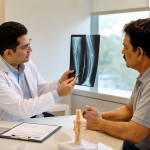
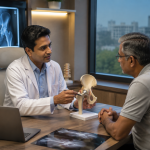
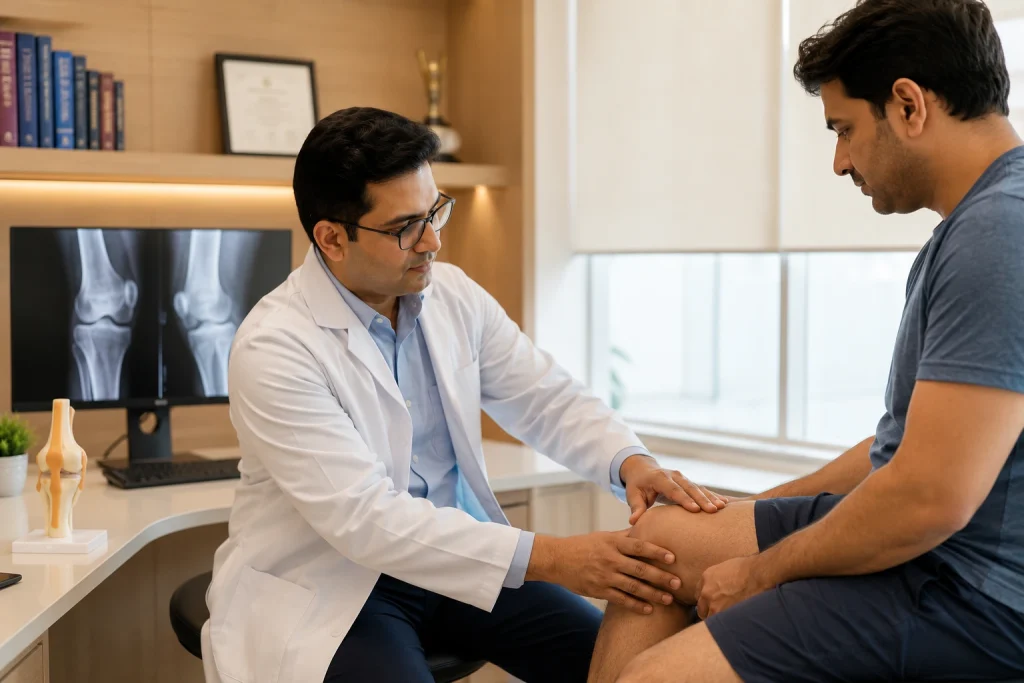
Clinical Examination An orthopedic doctor typically assesses pain location, swelling, range of motion, joint stability, alignment, walking pattern, muscle strength, and functional limitations.
X-Ray X-rays help evaluate joint-space narrowing, bone changes, alignment, and overall arthritis severity — one of the most common tools used in this evaluation.
MRI In selected cases, MRI may help assess soft tissues such as cartilage, menisci, and ligaments. MRI isn’t required for every patient before knee replacement is considered.
Recovery After Knee Replacement
Recovery varies from person to person and generally involves:
- Early guided movement
- Structured physiotherapy
- Gradual walking with support as needed
- Strengthening exercises
- Range-of-motion work
- Regular follow-up appointments
- A gradual return to daily activities
Improvement tends to happen progressively rather than overnight, and rehabilitation plays a central role in how well recovery goes.
Physiotherapy After Knee Replacement
Physiotherapy supports recovery by:
- Restoring knee movement
- Improving muscle strength around the joint
- Reducing stiffness
- Improving walking ability
- Building confidence with movement
- Helping patients gradually resume daily activities
Possible Risks and Complications
As with any surgery, knee replacement carries potential risks, including:
- Infection
- Blood clots
- Bleeding
- Stiffness
- Persistent pain
- Implant-related problems
- Nerve or blood vessel injury
- Wear or loosening of the implant over time
- Possible need for additional surgery
Risks vary between individuals, and these should always be discussed in detail with your treating orthopedic surgeon.
Home Care After Knee Replacement
- Follow your surgeon’s specific instructions
- Complete the recommended physiotherapy program
- Use walking aids as advised
- Care for the surgical wound as instructed
- Follow medication instructions from your doctor
- Attend all follow-up appointments
- Avoid activities that haven’t been cleared yet
- Increase activity gradually, following your rehabilitation plan
How Long Does a Knee Replacement Last?
Modern knee replacements can provide long-term improvement for many patients, though implant longevity varies based on factors such as implant type, activity level, body weight, bone quality, surgical factors, rehabilitation, and overall health. There’s no fixed number of years that applies to every patient.
Knee Replacement Surgery in Subramanyapura
People searching for Knee Replacement Surgery in Subramanyapura are often dealing with persistent knee pain, advanced arthritis, stiffness, difficulty walking, or a noticeable decline in mobility that’s starting to affect everyday life.
If you’re looking for a knee replacement surgeon in Subramanyapura or a knee replacement doctor in Subramanyapura, it helps to consult a qualified orthopedic professional who can properly examine your knee, review appropriate imaging, discuss non-surgical options first, and help determine whether surgery is genuinely appropriate for your situation.
Patients across Subramanyapura and nearby areas — including JP Nagar, Jayanagar, Banashankari, Bannerghatta Road, Doddakallasandra, and Vajrahalli — commonly seek guidance on knee pain treatment in Subramanyapura and knee arthritis treatment in Subramanyapura, along with options like total knee replacement in Subramanyapura and robotic knee replacement in Subramanyapura, as part of a complete evaluation process.
Why Choose an Orthopedic Knee Specialist?
A qualified orthopedic specialist plays a central role in:
- Reaching an accurate diagnosis
- Identifying the actual cause of knee pain
- Assessing the severity of arthritis
- Reviewing imaging findings
- Considering non-surgical treatment first
- Determining whether surgery is appropriate
- Choosing between partial and total replacement, where relevant
- Discussing robotic-assisted options where suitable
- Planning post-surgical rehabilitation
- Providing long-term follow-up care
Dr. Vijay Kulkarni, an orthopedic surgeon practicing in Bangalore, brings clinical experience in knee care, including robotic knee replacement, alongside broader expertise in hip replacement, sports injury treatment, shoulder surgery, arthroscopy, and trauma care.
When Should You See a Knee Replacement Surgeon?
Consider an orthopedic assessment if:
- Knee pain persists despite treatment
- Pain interferes with daily activities
- Walking has become difficult
- Stairs are increasingly challenging
- Knee stiffness is limiting movement
- Knee deformity has developed
- Pain is affecting your sleep or routine
- X-rays show signs of advanced arthritis
- Conservative treatment hasn’t provided sufficient relief
- Knee function keeps declining
Seeing a specialist does not automatically mean you’ll need surgery — it simply means getting a clearer picture of your options.
Prevention and Knee Health Tips
- Maintain a healthy body weight where appropriate
- Stay physically active within comfortable limits
- Strengthen the muscles supporting the knee
- Work on flexibility and balance
- Avoid high-impact activities when they cause pain
- Treat injuries appropriately and promptly
- Use proper technique during sports and exercise
- Support overall bone and joint health
- Seek medical assessment for persistent knee pain
Knee arthritis can’t always be prevented, but these habits may help support joint health over time.
Comparison Tables
Mild/Moderate Arthritis vs Advanced Arthritis
| Feature | Mild/Moderate Arthritis | Advanced Arthritis |
| Pain | May be intermittent | Often persistent |
| Mobility | Usually relatively preserved | May become significantly limited |
| Daily activities | May remain manageable | Can become difficult |
| Imaging | Early or moderate changes | Significant joint degeneration |
| Treatment | Often non-surgical initially | Joint replacement may be considered in selected patients |
Common Arthritis Symptoms vs Reasons for Specialist Assessment
| Feature | Common Arthritis Symptoms | Reasons for Orthopedic Assessment |
| Pain | Knee pain with activity | Persistent or worsening pain |
| Stiffness | Especially after inactivity | Significant movement limitation |
| Walking | Mild difficulty | Increasing difficulty walking |
| Stairs | Pain may occur | Stairs become consistently difficult |
| Function | Some activities remain possible | Daily activities are significantly affected |
Robotic vs Conventional Knee Replacement
| Factor | Robotic-Assisted Surgery | Conventional Surgery |
| Planning | Computer-assisted planning may be used | Standard surgical planning |
| Guidance | Robotic/computer assistance may guide certain steps | Surgeon uses conventional surgical techniques |
| Surgeon role | Surgeon remains responsible for the procedure | Surgeon performs the procedure |
| Suitability | Depends on patient and surgical plan | Widely used for appropriate patients |
| Decision basis | Clinical needs and available technology | Clinical needs and surgical assessment |
Frequently Asked Questions:
- When is knee replacement surgery really needed?
Knee replacement may be considered when advanced arthritis or joint damage causes persistent pain, difficulty with daily activities, reduced mobility, or deformity, and when appropriate non-surgical treatments haven’t provided adequate relief. The decision is based on a combination of symptoms, examination, and imaging findings.
- Can severe knee arthritis be treated without knee replacement?
Many patients with knee arthritis, including moderate to advanced cases, can be managed for a period using physiotherapy, weight management, medications, and selected injections. Whether this is sufficient depends on the individual’s symptoms and joint condition, which is best assessed by an orthopedic doctor.
- How do I know if I may need a knee replacement?
There’s no single symptom that confirms this. Persistent pain, stiffness, difficulty walking or climbing stairs, and reduced quality of life are signs worth discussing with a doctor. A clinical examination and imaging are needed to properly assess your knee condition.
- Is total knee replacement suitable for everyone with arthritis?
No. Total knee replacement is generally reserved for more extensive joint damage. Some patients may be candidates for partial knee replacement, while others may not need surgery at all. Suitability is determined case by case.
- What is robotic knee replacement?
Robotic knee replacement uses computer-assisted technology to help with surgical planning and guide certain steps of the procedure, such as component positioning. The surgeon performs and remains fully responsible for the surgery throughout.
- How long does recovery after knee replacement take?
Recovery time varies by individual and depends on factors like overall health, rehabilitation adherence, and the extent of surgery. Physiotherapy and gradual activity are typically part of the recovery process, with improvement occurring progressively.
- When should I see a knee replacement surgeon?
Consider a consultation if knee pain persists despite treatment, interferes with daily life, or if you notice worsening stiffness, deformity, or difficulty walking. A consultation helps clarify your options — it doesn’t automatically mean surgery is required.
- Where can I get knee replacement treatment in Subramanyapura?
Patients in Subramanyapura and nearby areas like JP Nagar, Jayanagar, and Banashankari can consult an orthopedic surgeon such as Dr. Vijay Kulkarni for a thorough evaluation of knee pain, arthritis severity, and appropriate treatment options, including non-surgical care and knee replacement where indicated.
Conclusion
Knee arthritis doesn’t automatically mean you need knee replacement surgery. Many patients find meaningful relief through non-surgical treatment, at least for a period of time. Surgery tends to become a more relevant consideration when persistent pain, significant functional limitations, and advanced joint damage — confirmed through clinical examination and imaging — no longer respond adequately to conservative care.
Whether it’s total or partial knee replacement, or a discussion about robotic-assisted options, the right path depends entirely on your individual condition. If you’re exploring Knee Replacement Surgery in Subramanyapura, the best first step is a proper orthopedic evaluation to understand where you truly stand and what your options are.
Call to Action
If you’re in Subramanyapura, JP Nagar, Jayanagar, Banashankari, Bannerghatta Road, Doddakallasandra, or Vajrahalli and dealing with persistent knee pain, arthritis, or mobility difficulties, an orthopedic evaluation can help you understand your treatment options — surgical or otherwise.
Book a consultation with Dr. Vijay Kulkarni to discuss your symptoms, review your knee health, and explore the treatment path that’s right for you.