
If your knees feel stiffer than they used to, or a simple flight of stairs suddenly feels like a workout, you’re not imagining it. Knee pain that creeps in after your 40s is one of the most common reasons people search for a knee replacement surgeon in Raghuvanahalli — and often, it’s the earliest sign of osteoarthritis. The good news is that catching these changes early can make a real difference in how your knees feel for years to come. This guide walks you through the warning signs your joints may be sending you, why they matter, and what steps actually help.
Early signs of knee arthritis include morning stiffness, pain while climbing stairs, swelling after activity, a grinding or clicking sensation, and difficulty standing up after sitting for long periods. These symptoms often start mild and worsen gradually. Consulting a knee replacement surgeon in Raghuvanahalli early can help slow cartilage damage and avoid more invasive treatment later.
Knee arthritis, most commonly osteoarthritis, develops as cartilage cushioning the knee joint gradually wears down. Early symptoms include stiffness (especially in the morning), pain during stairs or prolonged walking, mild swelling, and joint clicking. Risk factors include age over 40, obesity, past knee injuries, genetics, and repetitive joint stress. Diagnosis typically involves a physical exam, X-rays, and sometimes MRI. Treatment starts conservatively with physiotherapy, weight management, medications, and injections. Surgery — including partial, total, or robotic knee replacement — is considered only when non-surgical options no longer control pain or when joint damage is advanced. Early orthopedic evaluation helps preserve mobility, delay surgery, and improve long-term joint health and quality of life.
What Is Knee Arthritis?
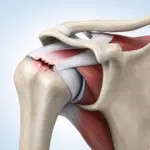
Knee arthritis refers to inflammation and gradual breakdown of the knee joint, most often caused by osteoarthritis — the “wear and tear” form of arthritis. Inside a healthy knee, smooth cartilage cushions the ends of the thigh bone (femur) and shin bone (tibia), allowing pain-free movement. Over time, especially after age 40, this cartilage can thin out. As it wears away, bones may begin to rub against each other, causing pain, stiffness, and swelling.
This age-related joint degeneration doesn’t happen overnight. It’s a slow process, which is exactly why early symptoms are so easy to dismiss as “just getting older.”
Early Signs of Knee Arthritis
Recognizing these symptoms early is the single most useful thing you can do for your joint health.
- Knee pain after age 40 — a dull ache that appears during or after activity, often the first noticeable sign
- Morning stiffness — knees feel tight or hard to bend for the first few minutes after waking up
- Pain while walking — discomfort that builds up during longer walks
- Pain climbing stairs — going up (or down) stairs feels noticeably harder than it used to
- Difficulty standing after sitting — a stiff, achy feeling when getting up from a chair or car seat
- Swelling — mild puffiness around the knee, especially after a long day
- Clicking sounds — audible clicks or pops during movement
- Grinding sensation — a rough, grating feeling known as crepitus
- Reduced flexibility — trouble fully bending or straightening the knee
- Knee weakness — a feeling that the knee might “give way”
- Joint instability — a sense of looseness or unpredictability while walking on uneven ground
Individually, these signs seem minor. Together, especially if they persist for more than a few weeks, they’re worth discussing with a joint pain doctor.
Why Early Diagnosis Matters
Many patients wait months — sometimes years — before seeking help, assuming the pain will pass. Early diagnosis matters because it can:
- Prevent further cartilage damage by addressing the problem before it progresses
- Delay or reduce the need for knee replacement through timely conservative treatment
- Improve quality of life by restoring mobility and reducing daily discomfort
Simply put, the earlier arthritis is identified, the more treatment options remain on the table.
Common Causes
- Aging — natural cartilage thinning over time
- Obesity — excess body weight adds significant load to knee joints
- Previous knee injuries — old ligament or meniscus injuries increase long-term risk
- Sports injuries — repetitive stress from high-impact activities
- Genetics — family history of osteoarthritis
- Rheumatoid arthritis — an autoimmune condition that also affects the knee joint
- Muscle weakness — weak thigh muscles reduce joint support
- Poor posture — uneven weight distribution over time
Risk Factors
You may be at higher risk of developing knee arthritis if you:
- Are above 40 years of age
- Are overweight or obese
- Have a physically demanding job involving kneeling or heavy lifting
- Play high-impact sports regularly
- Have a family history of arthritis
- Had a past knee injury, fracture, or surgery
- Lead a largely sedentary lifestyle with weak supporting muscles
Symptoms That Should Never Be Ignored
Certain signs call for prompt orthopedic consultation rather than a wait-and-watch approach:
- Sudden, severe knee pain or swelling
- Visible deformity or the knee locking in one position
- Inability to bear weight on the affected leg
- Redness and warmth around the joint (possible infection or inflammatory arthritis)
- Persistent night pain that disrupts sleep
- Knee giving way repeatedly, leading to falls
If you notice any of these, don’t wait — see an arthritis specialist in Raghuvanahalli as soon as possible.
Diagnosis by an Orthopedic Specialist
An accurate diagnosis usually involves a combination of:
- Medical History — understanding your symptoms, lifestyle, and past injuries
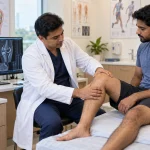
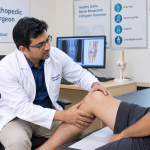
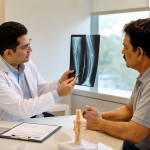
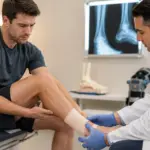
- Physical Examination — checking joint movement, alignment, swelling, and stability
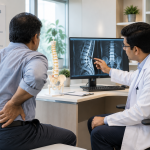
- X-rays — the standard first step to assess joint space narrowing and bone changes
- MRI — used when soft tissue, cartilage, or ligament detail is needed
- CT Scan — occasionally used for complex bone assessment before surgery
- Blood Tests — ordered if an inflammatory or autoimmune arthritis is suspected
Non-Surgical Treatments
Most patients with early to moderate arthritis respond well to conservative knee stiffness treatment options, including:
- Physiotherapy — targeted exercises to strengthen muscles around the knee
- Weight loss — even a modest reduction eases pressure on the joint
- Activity modification — adjusting high-impact activities to lower-impact alternatives
- Knee braces — providing extra support and stability
- Pain medications — anti-inflammatory drugs for symptom relief
- PRP therapy — platelet-rich plasma injections that may support joint healing
- Hyaluronic acid injections — helping lubricate the joint for smoother movement
- Lifestyle modifications — posture correction, footwear changes, and activity pacing
Medical disclaimer: These treatments should only be started under the guidance of a qualified orthopedic specialist after proper evaluation.
When Is Knee Replacement Needed?
Surgery is generally considered only after conservative treatment no longer provides relief, typically when there is:
- Severe, advanced-stage arthritis confirmed on imaging
- Persistent pain that interferes with daily activities or sleep
- Visible joint deformity or significant misalignment
- Failure of medications, injections, and physiotherapy to control symptoms
Types of Knee Replacement
- Partial Knee Replacement — replaces only the damaged portion of the joint; suited for arthritis limited to one compartment of the knee
- Total Knee Replacement — replaces the entire joint surface; recommended for widespread joint damage
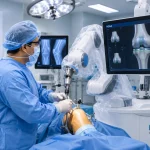
- Robotic Knee Replacement — uses robotic-assisted precision for implant placement
Advantages of robotic knee replacement include greater surgical accuracy, potentially faster recovery, and improved implant longevity. Recovery is generally comparable to or slightly quicker than conventional surgery, and suitability is determined case by case after imaging and clinical evaluation.
Recovery Timeline
| Recovery Phase | What to Expect |
| Week 1–2 | Hospital stay, initial walking with support, pain management |
| Week 3–4 | Reduced swelling, walking with a walker or cane |
| Week 5–8 | Improved strength, physiotherapy-focused mobility gains |
| Week 9–12 | Walking independently, returning to light daily activities |
| 3–6 Months | Near-normal movement, return to most routine activities |
Individual recovery timelines vary based on age, overall health, and adherence to physiotherapy.
Prevention Tips
- Maintain a healthy body weight
- Stay consistent with low-impact exercise like walking or swimming
- Strengthen the muscles supporting your knees
- Follow a balanced, anti-inflammatory diet
- Protect your joints during physical activity
- Avoid prolonged sitting or standing in one position
- Seek early orthopedic consultation at the first sign of persistent pain
When Should You Consult an Orthopedic Surgeon?
If knee pain, stiffness, or swelling lasts more than two to three weeks, or begins to affect your daily routine, it’s time to consult a specialist. Early evaluation by a knee replacement surgeon in Raghuvanahalli helps identify the exact cause and prevents the condition from silently progressing.
Comparison Tables
Early Arthritis vs Advanced Arthritis
| Feature | Early Arthritis | Advanced Arthritis |
| Pain | Occasional, activity-related | Constant, even at rest |
| Stiffness | Mild, mostly in the morning | Persistent throughout the day |
| Mobility | Largely normal | Significantly restricted |
| Imaging findings | Minor joint space narrowing | Severe cartilage loss, bone-on-bone |
| Treatment | Conservative management | Often requires surgery |
Normal Knee Pain vs Arthritis Pain
| Feature | Normal Knee Pain | Arthritis Pain |
| Onset | Sudden, after activity/injury | Gradual, over months or years |
| Duration | Resolves within days | Persistent or recurring |
| Stiffness | Rare | Common, especially in mornings |
| Swelling | Occasional | Frequent after activity |
Home Care vs Medical Treatment
| Aspect | Home Care | Medical Treatment |
| Best for | Very mild, occasional discomfort | Persistent or worsening symptoms |
| Methods | Rest, ice, gentle stretching | Physiotherapy, injections, medication |
| Long-term effectiveness | Limited | Structured and monitored |
| Risk of delay | Can worsen joint damage | Reduces progression risk |
Partial vs Total Knee Replacement
| Feature | Partial Knee Replacement | Total Knee Replacement |
| Extent of surgery | Only damaged compartment replaced | Entire joint surface replaced |
| Ideal for | Localized arthritis | Widespread joint damage |
| Recovery | Often faster | Slightly longer |
| Bone preservation | More natural bone retained | Less bone retained |
Frequently Asked Questions
- What are the earliest signs of knee arthritis? The earliest signs are usually morning stiffness, mild pain after activity, and occasional swelling. These symptoms often go unnoticed at first but tend to become more frequent over time, especially after age 40.
- Can knee arthritis be reversed? Cartilage damage from osteoarthritis cannot be fully reversed, but early treatment can significantly slow progression, manage pain, and preserve joint function for many years.
- Is knee pain after 40 always arthritis? Not always. Knee pain after 40 can also result from muscle strain, ligament issues, or minor injuries. An orthopedic evaluation helps determine the exact cause.
- When should I see a joint pain doctor? See a specialist if knee pain, stiffness, or swelling lasts more than two to three weeks, worsens over time, or interferes with daily activities like walking or climbing stairs.
- Is surgery the only treatment for knee arthritis? No. Most patients respond well to non-surgical treatments like physiotherapy, weight management, and medications. Surgery is considered only when conservative treatment no longer helps.
- What is robotic knee replacement? Robotic knee replacement uses robotic-assisted technology to improve surgical precision during implant placement, which may lead to better alignment and potentially faster recovery.
- How long does recovery after knee replacement take? Most patients walk with support within days and return to normal daily activities within three to six months, depending on age, health, and physiotherapy adherence.
- Can lifestyle changes help delay knee replacement? Yes. Maintaining a healthy weight, regular low-impact exercise, and muscle strengthening can meaningfully delay arthritis progression and reduce the need for surgery.
Conclusion
Knee arthritis rarely announces itself loudly — it usually starts as a small ache, a bit of morning stiffness, or a click you brush off. But these early signals matter. Recognizing them early and seeking timely care can preserve your mobility, delay or even avoid surgery, and keep you active for years to come. If your knees have been sending you signals lately, it’s worth listening.
Book Appointment:
Living in Raghuvanahalli, JP Nagar, Jayanagar, Banashankari, Bannerghatta Road, Doddakallasandra, or Vajrahalli and noticing early knee discomfort? Don’t wait for it to worsen. Book a consultation with Dr. Vijay Kulkarni, an experienced orthopedic surgeon specializing in knee pain treatment, arthritis care, and advanced robotic knee replacement. Get an accurate diagnosis and a personalized treatment plan designed to keep you moving comfortably.