Introduction
Lower back pain that spreads into the buttock or leg can be worrying. Many people search Sciatica vs Slipped Disc because the two terms are often used as if they mean the same thing. They do not.
Sciatica describes a pattern of nerve-related pain. A slipped disc describes a structural change in a spinal disc. A slipped disc can irritate or press on a nerve and cause sciatica, but sciatica can also have other causes.
Many episodes of back and leg pain improve with appropriate care. Persistent symptoms, growing weakness, and certain emergency warning signs need prompt medical attention. This guide explains the difference in simple terms.
What is the difference between sciatica and a slipped disc?
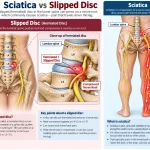
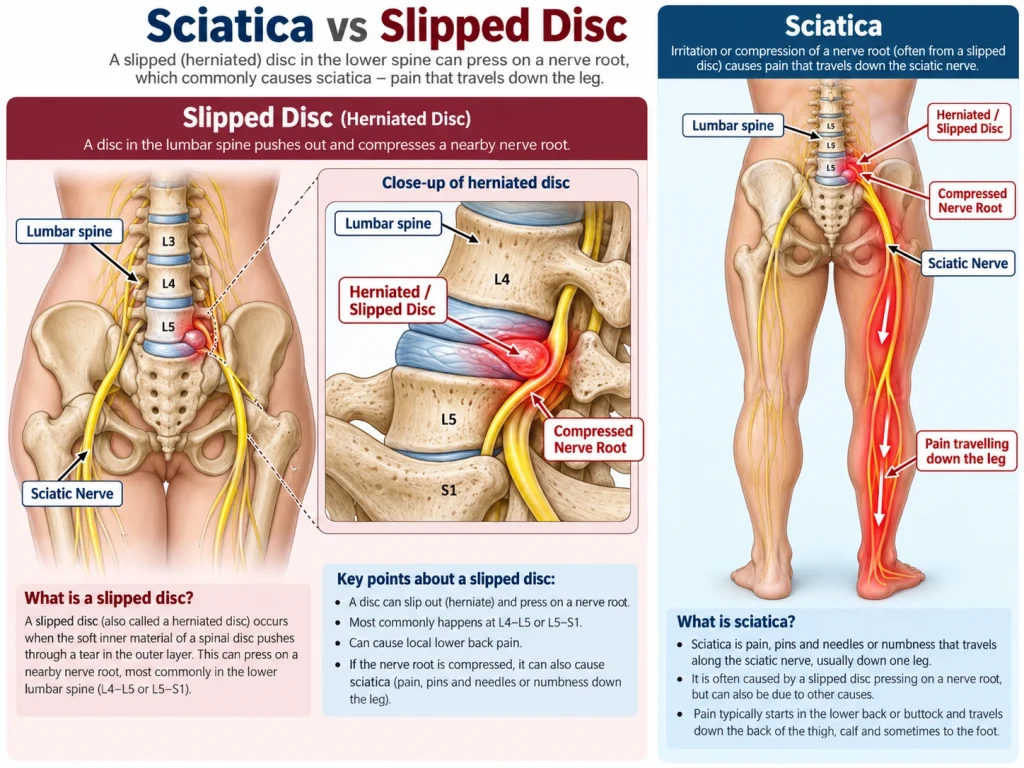
Sciatica is a pattern of pain, tingling, or numbness that travels along the sciatic nerve pathway, often from the lower back or buttock down one leg. A slipped disc is a spinal disc problem in which disc material pushes beyond its usual boundary. A slipped disc can cause sciatica, but sciatica can also come from other causes.
Sciatica is a symptom pattern in which irritation or compression of the sciatic nerve roots causes pain, tingling, numbness, or weakness, usually down one leg. A slipped disc usually means a herniated intervertebral disc, where disc material extends beyond its normal boundary. If that material irritates a nearby nerve root, it can cause sciatica, although not every herniated disc causes symptoms. Doctors assess the history, examine strength, sensation, and reflexes, and may use MRI when findings warrant it. Many cases improve with non-surgical care such as activity adjustment and physiotherapy. New bladder or bowel problems, saddle-area numbness, or rapidly worsening leg weakness need emergency care. Clinical assessment matters because other conditions can look similar.
What Is Sciatica?
Sciatica is a symptom pattern. It involves pain linked to irritation or compression of the sciatic nerve roots or related nerve pathways. The sciatic nerve is a long nerve that begins in the lower spine and runs through the buttock and down the leg.
Pain may travel from the lower back or buttock down one leg. It can feel sharp, shooting, or burning. Some people notice tingling, numbness, or weakness. Symptoms often affect one side, although this can vary.
Sciatica is not a single diagnosis with one cause. A herniated disc, spinal stenosis (narrowing of the space around the nerves), or other conditions can lead to similar nerve symptoms. Also, not all leg pain is sciatica.
What Is a Slipped Disc?
Spinal discs sit between the bones of the spine (vertebrae). They act as cushions, help spread loads, and allow the spine to move.
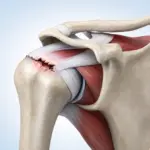
A “slipped disc” usually means a herniated disc. This is when disc material extends beyond its usual boundary. The name can be misleading. The whole disc has not literally slipped out of place.
A herniated disc may irritate or press on a nearby nerve. Depending on the location and how much the nerve is affected, symptoms may include back pain, pain down the leg, tingling, numbness, or weakness. Some people have disc changes on scans but no related symptoms at all.
Sciatica vs Slipped Disc: What Is the Difference?
The key difference is this. Sciatica describes what a person feels. A slipped disc describes a structural change in the spine. One can cause the other, but they are not interchangeable terms.
| Aspect | Sciatica | Slipped Disc |
| Meaning | A pattern of nerve-related pain, often down one leg | A disc where material extends beyond its usual boundary |
| Type of condition | Symptom pattern | Structural condition |
| Common causes | Disc herniation, spinal stenosis, other nerve irritation | Wear and age-related change, strain, injury, or sometimes no clear trigger |
| Typical symptoms | Radiating leg pain, tingling, numbness, weakness | Back pain, leg pain if a nerve is affected, or no symptoms |
| Relationship to nerve compression | Result of nerve irritation or compression | May cause nerve irritation or compression |
| Role of clinical examination | Helps locate which nerve may be involved | Helps decide whether symptoms match the disc finding |
| When imaging may be considered | Severe, persistent, or worsening symptoms | When findings are concerning or imaging may change care |
| General treatment approach | Depends on the cause; often starts non-surgically | Depends on symptoms and nerve findings; many do not need surgery |
Common Symptoms of Sciatica
Sciatica symptoms differ from person to person. Common features include:
- Pain that radiates from the buttock down the leg
- Burning or electric-shock-like pain
- Tingling or pins-and-needles
- Numbness in part of the leg or foot
- Pain that worsens with certain movements, coughing, or sneezing
- Muscle weakness in more significant cases
These patterns can point towards nerve irritation, but they cannot confirm a diagnosis by themselves. A clinical examination is needed.
Common Symptoms of a Slipped Disc
Slipped disc symptoms depend on where the disc is and which nerve is affected. They may include:
- Lower back pain, although some people have little back pain
- Pain spreading into the buttock or leg when a nerve is involved
- Tingling or numbness
- Muscle weakness
- Symptoms that vary with the disc’s location
Disc changes may also be present without any symptoms. This means a person cannot identify a herniated disc from symptoms alone, and a scan finding does not always explain the pain.
Can a Slipped Disc Cause Sciatica?
Yes, it can. When disc material irritates or presses on a nerve root in the lower spine, pain may travel down the leg. This is one of the more common causes of sciatica.
However:
- Not every herniated disc causes sciatica.
- Sciatica can have causes other than a herniated disc.
- Scan findings must be read together with symptoms and a physical examination.
- Other conditions can produce similar pain and may need different care.
Red Flags: When Is Back or Leg Pain an Emergency?
Seek emergency medical care immediately if you have:
- New difficulty starting to pass urine, or being unable to pass urine
- Loss of bladder or bowel control
- Numbness around the groin, genitals, buttocks, or inner thighs (sometimes called saddle numbness)
- Severe or rapidly worsening weakness in one or both legs
- New nerve symptoms in both legs, especially with bladder, bowel, or saddle-area symptoms
These signs may point to cauda equina syndrome, a serious condition in which the group of nerves at the lower end of the spinal canal is compressed. It needs urgent assessment. Do not wait for a routine appointment or an elective MRI.
Other features also call for prompt medical review:
- Significant trauma, such as a fall or accident
- Back pain with fever or feeling seriously unwell
- A history of cancer with new, unexplained back pain
- Unexplained weight loss with persistent symptoms
- Severe, worsening, or persistent pain
One warning sign does not always mean something serious is present. But none of them should be ignored.
How Are Sciatica and a Slipped Disc Diagnosed?
Diagnosis usually begins with a conversation and an examination. A clinician may:
- Ask about your symptoms, how long they have lasted, and how they affect daily life
- Examine your walking, strength, sensation, reflexes, and relevant movements
- Consider other possible causes
Imaging is used selectively:
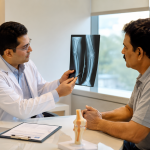
- X-rays show bones and some structural changes. They do not show a herniated disc the way MRI does.
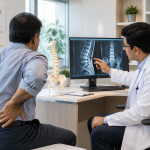
- MRI may be considered when symptoms are severe or persistent, when nerve findings are concerning, or when the result could change treatment.
- Emergency symptoms may need urgent assessment and imaging.
Not everyone with uncomplicated back pain or sciatica needs an immediate MRI. Imaging results must always be interpreted in the context of symptoms and examination.
Treatment Options for Sciatica and a Slipped Disc
Treatment depends on the cause, how severe the symptoms are, nerve findings, and general health. Non-surgical approaches a clinician may recommend include:
- Staying active as tolerated
- Temporarily adjusting activities that aggravate symptoms
- Physiotherapy and individually prescribed exercises
- Pain-management options chosen by a clinician
- Follow-up to monitor symptoms and nerve function
Prolonged bed rest is generally not the preferred approach for uncomplicated back pain. Activity should match your symptoms and medical advice.
Surgery may be considered for selected people whose disabling symptoms continue despite appropriate non-surgical care. Significant or worsening nerve problems can change how urgently assessment is needed. The decision depends on clinical findings, the cause, risks, and the patient’s goals. Medicines and doses should only be chosen by your clinician.
When Is Surgery Considered for a Slipped Disc?
Most people with a herniated disc do not automatically need surgery. Factors that may prompt a surgical opinion include:
- Persistent, disabling pain despite appropriate treatment
- Scan findings that match the symptoms and examination
- Significant or worsening muscle weakness
- Nerve compression needing urgent intervention
- Bladder, bowel, or saddle-area symptoms that may signal an emergency
The type and timing of any procedure depend on the underlying condition and specialist assessment. Surgery cannot be promised to remove all pain or restore every lost function.
Sciatica vs Slipped Disc: How Long Does Recovery Take?
Recovery varies widely, and no fixed timeline fits everyone.
- Many uncomplicated episodes of sciatica improve over time with suitable care.
- Recovery from a herniated disc depends on symptoms, how much the nerve is affected, and other health factors.
- Some symptoms may persist or return.
- Muscle weakness or other nerve symptoms need proper monitoring.
- Recovery after surgery follows a different path and depends on the procedure and the person.
Physiotherapy and Self-Care for Sciatica
Physiotherapy for sciatica focuses on helping you move and function better. Helpful principles include:
- Returning gradually to suitable daily activity
- Using movement and strengthening exercises chosen for your condition
- Adjusting long periods of sitting or other aggravating activities
- Following your clinician’s advice
- Avoiding any exercise that causes new or worsening nerve symptoms
- Seeking reassessment if symptoms progress
Exercises should be selected for the individual. Copying a generic online routine may not suit your condition.
Sciatica Treatment in Bangalore
People looking for sciatica treatment in Bangalore are often comparing clinical assessment, imaging needs, non-surgical care, physiotherapy, and possible surgical options. The same applies to slipped disc treatment in Bangalore. If you are searching for a spine specialist in Bangalore, these questions can help you compare care:
- Check qualifications and scope. Verify the clinician’s qualifications and the conditions they treat.
- Ask about assessment. How will symptoms and nerve findings be examined?
- Ask about imaging. Is a scan needed, and how would the result change treatment?
- Understand non-surgical options. What can be tried first?
- Know the warning signs. Which symptoms need urgent reassessment?
- Confirm the location. Check the actual consultation address and available services before you travel.
- Ask about referral. What happens if specialist spine care or surgery is needed?
Dr. Vijay Kulkarni’s website lists clinic details at Encore Speciality Clinics in Doddakallasandra, on Kanakapura Road, and at KIMS Hospitals in Electronic City. It also lists patients visiting from areas such as JP Nagar, Jayanagar, Banashankari, and Bannerghatta Road. Please confirm current details with the clinic before visiting.
When Should You Consult an Orthopedic Surgeon or Spine Specialist?
Consider an assessment if you have:
- Persistent lower back pain with pain down the leg
- Sciatica that keeps coming back
- Numbness or tingling that is not improving
- Difficulty walking or doing daily tasks
- Symptoms that continue despite recommended care
- New or worsening weakness
- Scan findings that need clinical interpretation
Urgent nerve symptoms need emergency care, not a routine consultation.
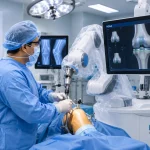
Dr. Vijay Kulkarni is an orthopedic surgeon in Bangalore. His website lists MBBS, MS (Ortho), and a Fellowship in Joint Replacement. It lists services such as robotic joint replacement, arthroscopy, sports injury treatment, and fracture and trauma management. It also has a Spine Treatments page. A consultation can help clarify whether your back and leg symptoms need further evaluation.
Tips for Supporting Lower Back Health
- Stay physically active in a way that suits you.
- Increase exercise intensity gradually.
- Strengthen your trunk and supporting muscles with proper guidance.
- Avoid long periods in positions that aggravate your symptoms.
- Use safe lifting techniques.
- Maintain a healthy body weight where appropriate.
- Seek medical advice for persistent or worsening symptoms.
- Follow prescribed treatment and rehabilitation advice.
These steps cannot prevent every disc problem or remove all risk of sciatica.
Comparison Tables
Table A: Sciatica vs Slipped Disc
| Factor | Sciatica | Slipped Disc |
| Definition | Pain pattern linked to sciatic nerve root irritation or compression | Herniated disc with material beyond its usual boundary |
| Main type of problem | Symptom pattern | Structural disc condition |
| Common symptoms | Leg pain, tingling, numbness, weakness | Back pain, leg symptoms if a nerve is affected, or none |
| Possible causes | Herniated disc, spinal stenosis, other conditions | Age-related change, strain, injury |
| Relationship to nerve compression | Reflects nerve irritation or compression | May cause nerve irritation or compression |
| How diagnosis is assessed | History, examination, imaging when indicated | History, examination, MRI when indicated |
| Treatment considerations | Depends on the cause and severity | Depends on symptoms and nerve findings |
Table B: Non-Surgical Care vs Surgery
| Factor | Non-Surgical Care | Surgery |
| Typical use | Many people with sciatica or a herniated disc | Selected people with persistent, disabling, or worsening problems |
| Treatment approach | Activity guidance, physiotherapy, clinician-selected pain relief, follow-up | Procedure chosen after specialist assessment |
| Recovery considerations | Varies; symptoms may persist or return | Varies by procedure and person; outcomes are not guaranteed |
| Main decision factors | Symptom severity, nerve findings, daily function | Matching scan and clinical findings, progressive weakness, response to other care, patient goals |
Surgery is reserved for selected cases. Emergency symptoms need urgent evaluation.
Table C: Symptoms and Appropriate Response
| Symptom or finding | Recommended response | Reason for assessment |
| Mild, uncomplicated back pain | Routine care; stay active as tolerated; see a doctor if it persists | Most cases improve, but persistence needs review |
| Persistent radiating leg pain | Routine consultation | To find the cause and plan care |
| New or progressive muscle weakness | Prompt medical review | May show worsening nerve involvement |
| Bladder or bowel dysfunction with back or leg symptoms | Emergency care now | Possible cauda equina syndrome |
| Saddle-area numbness | Emergency care now | Possible cauda equina syndrome |
| Fever with significant back pain | Prompt medical review; emergency care if very unwell | Possible infection or another serious cause |
Frequently Asked Questions:
- What is the difference between sciatica and a slipped disc?
Sciatica is a pattern of nerve-related pain, while a slipped disc is a structural problem in a spinal disc. Sciatica describes what a person feels, such as pain travelling from the back or buttock down the leg. A slipped disc describes what may be happening in the spine. One can cause the other, but they are not the same, and a clinical assessment is needed to confirm the cause. - Can a slipped disc cause sciatica?
Yes, a slipped disc can cause sciatica when disc material irritates or presses on a nerve root in the lower spine. However, not every herniated disc causes symptoms, and sciatica can also come from other conditions such as spinal stenosis. Imaging findings need to be read together with symptoms and a physical examination, so a clinician’s assessment is important before any conclusion is drawn. - What are the common symptoms of sciatica?
Common sciatica symptoms include pain that travels from the lower back or buttock down one leg, along with burning, shooting pain, tingling, or numbness. Some people also notice leg weakness. Coughing, sneezing, or certain movements may worsen the pain. Symptoms vary from person to person and cannot confirm the cause alone, so persistent or worsening symptoms deserve a medical assessment. - How do I know if a slipped disc is serious?
A slipped disc may need urgent attention if it comes with new difficulty passing urine, loss of bladder or bowel control, numbness around the groin or buttocks, or rapidly worsening leg weakness. These can signal cauda equina syndrome and need emergency medical assessment, not a routine appointment. Other persistent or progressive symptoms should also be reviewed by a doctor promptly. - When should I get an MRI for sciatica or a slipped disc?
An MRI is not needed for every person with back pain or sciatica. It may be considered when symptoms are severe or persistent, when nerve problems such as weakness are found, or when the result could change treatment. Emergency symptoms may need urgent imaging. A doctor decides based on your history and examination, and imaging results must be interpreted alongside your symptoms. - Can sciatica and a slipped disc improve without surgery?
Many people with sciatica or a slipped disc improve without surgery, depending on the cause and severity. Non-surgical care may include staying active as tolerated, adjusting aggravating activities, physiotherapy, and clinician-selected pain relief, with follow-up. Recovery varies, and symptoms can persist or return. Surgery is considered only for selected people, so individual assessment is essential. - When should I see a spine specialist for sciatica?
See a doctor if back pain with leg pain persists, keeps returning, or limits walking and daily tasks. Prompt review is also advised for numbness or tingling that does not improve, or for new or worsening weakness. An orthopedic surgeon or spine specialist can assess these symptoms. Emergency signs such as bladder or bowel changes or saddle numbness need emergency care instead. - Where can I seek sciatica treatment in Bangalore?
People seeking sciatica treatment or slipped disc treatment in Bangalore can start with an orthopedic consultation for a clinical assessment. Dr. Vijay Kulkarni’s website lists clinics in Doddakallasandra on Kanakapura Road and at KIMS Hospitals in Electronic City, plus a Spine Treatments page. Ask how nerve findings will be assessed, whether imaging is needed, and which non-surgical options exist.
Conclusion
Understanding Sciatica vs Slipped Disc comes down to one idea. Sciatica is a pattern of nerve-related symptoms. A slipped disc is a structural change in a spinal disc. A herniated disc can cause sciatica, but the two are not interchangeable.
Symptoms alone cannot confirm the cause. Assessment usually involves a medical history, a nerve examination, and imaging when it is indicated. Many cases can be managed without surgery, while some need specialist or urgent assessment.
Emergency warning signs, such as bladder or bowel changes, saddle numbness, or rapidly worsening leg weakness, should never be ignored.
Living with back pain, pain down the leg, or tingling that is not settling?
If you are in Bangalore, including JP Nagar, Jayanagar, Banashankari, Electronic City, Bannerghatta Road, or Kanakapura Road, you can contact Dr. Vijay Kulkarni’s practice to discuss whether an orthopedic assessment may be appropriate. Not every patient needs specialist or surgical care. A consultation is a way to understand your symptoms and the options available.
- Appointments: Book via the website’s appointment link or use the Contact Us page
- Phone numbers listed on the website: +91 78996 24345 and +91 88675 17340 (re-check against the live site before publishing)
Emergency warning: If you have new difficulty passing urine, loss of bladder or bowel control, numbness around the groin or buttocks, or rapidly worsening leg weakness, go to the nearest emergency department immediately. Do not wait for an appointment.